
Market structure · May 2026
The 200% pump was fake. The real one hasn't started.
Some alts just did 200%. TOTAL3/BTC barely moved. Those are not the same story.
Some alts just did 200% on the USD pair. TOTAL3 on the Bitcoin pair moved roughly 5%. Those are not the same story — and the gap between them is exactly where most people are about to make an expensive mistake.
There are two camps forming right now. One group is looking at those 200% USD moves and telling themselves the alt season has arrived. The other group is still paralyzed, waiting for a cleaner signal that never quite comes. Both of them are looking at the wrong chart.
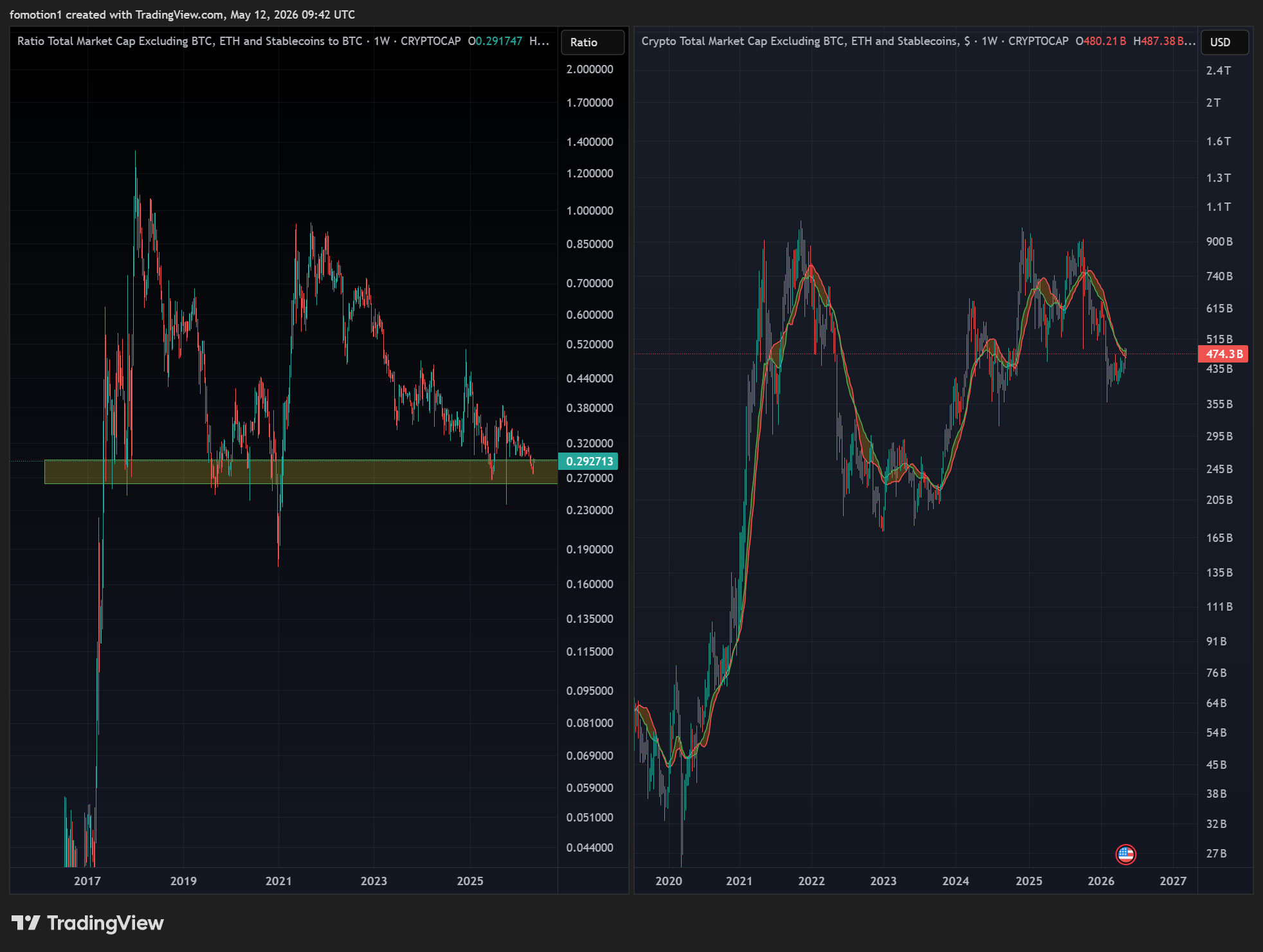
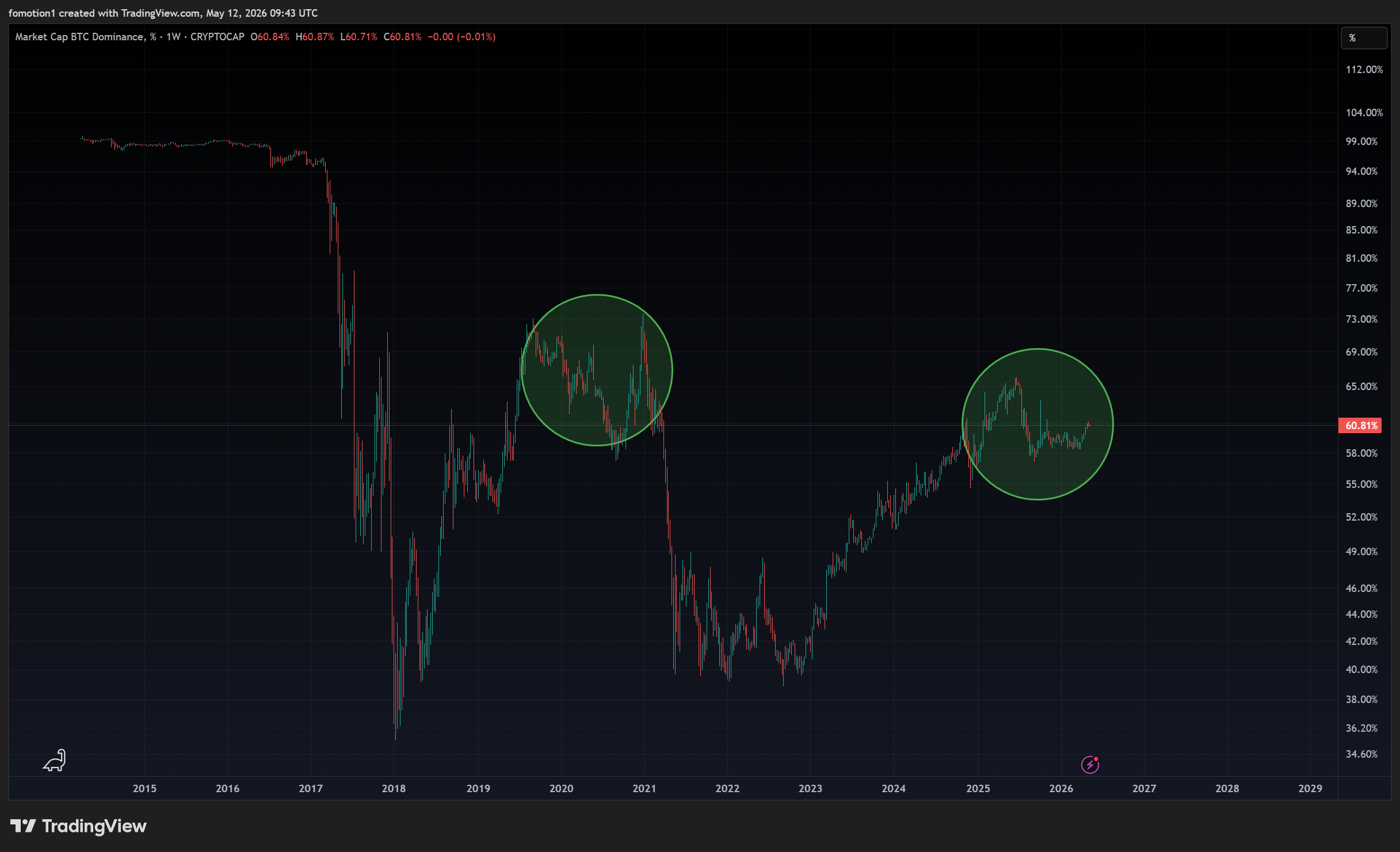
The pump was dollar weakness, not altcoin strength. When the dollar loses ground, everything priced in dollars goes up — crypto, gold, equities. That's not rotation. That's currency math. The real signal for an altcoin cycle is TOTAL3 on the Bitcoin pair moving. That number tells you capital is actually leaving Bitcoin and hunting for yield in alts. Right now, BTC dominance sits at 58.3%. The rotation hasn't fired. Fear & Greed is sitting at 49 — neutral, not greedy. Risk Wave is reading 30%, which is low risk, not launch condition. None of those numbers describe an alt season that has started. They describe one that is being set up.
This is the preview window — and it's the one that actually matters
Every cycle has a window like this. It sits between the fake pump and the real move, where the chart looks ambiguous and the narrative is loud. The people who build their list here — score the candidates with actual criteria, cut the low-conviction names, set tranches by price level rather than by calendar — those are the people already in position when the real leg starts. The people who chase after the fact are buying someone else's exit. I walked through exactly this dynamic in the video I dropped Friday. The TOTAL3/BTC chart at 2:00 is the single frame that changes how you read this market. Worth two minutes.
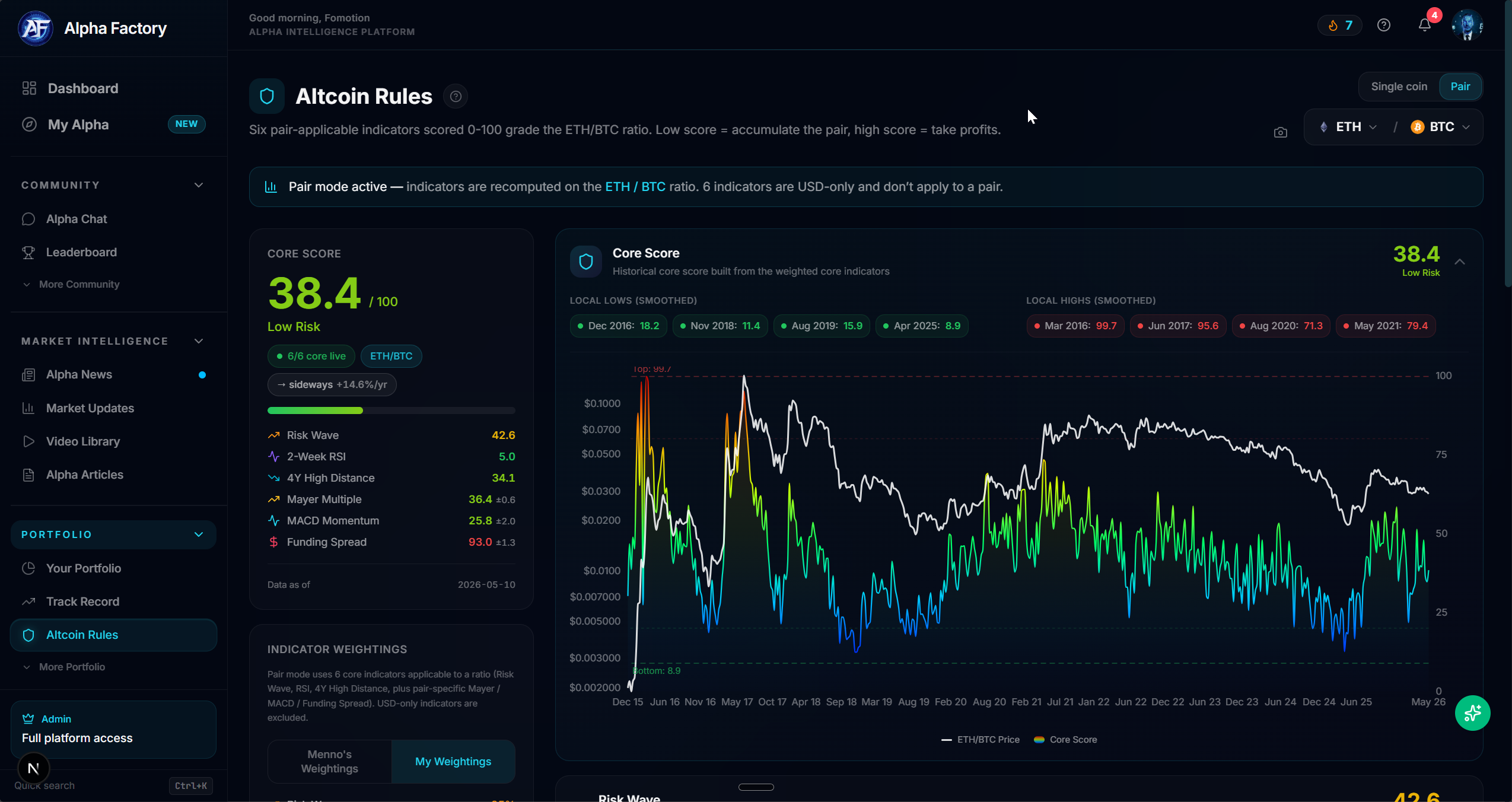
The way I'm using Altcoin Rules right now is straightforward: score the candidates before the move, not after. Run every name on your watchlist through the criteria, cut anything that doesn't hold up, and let the scores do the filtering. What survives that process is a short list that has earned its spot. Then DCA Planner handles the execution — tranches set by price level, not by a date you picked on a calendar. The calendar doesn't know where support is. The chart does.
The alt cycle doesn't restart on a date. It restarts when the data confirms the environment supports it.
Next Friday I'm naming the five altcoins I'm buying with real money — exact tranche levels, which names from the 200% list still have a valid entry, and which ones have already closed. The methodology is in the video. The question I want to hear from you is below.
A good start, but nothing yet |