
Blockchain's Missing Beat: Why AI Music Needs Decentralized Infrastructure
The AI music revolution is stumbling over a fundamental problem: nobody knows who owns what, and the royalty system is broken. When an AI generates a track based on thousands of training samples, the licensing nightmare begins.
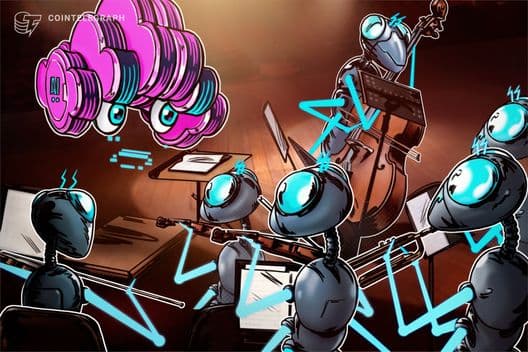
The AI music revolution is stumbling over a fundamental problem: nobody knows who owns what, and the royalty system is broken.
When an AI generates a track based on thousands of training samples, the licensing nightmare begins. Original creators don't get compensated. Remix chains become impossible to trace. Copyright holders can't verify their claims. The centralized music industry's infrastructure—built for the 20th century—can't handle algorithmic composition at scale.
The Ownership Crisis
Here's the core issue: AI-generated music exists in a legal gray zone. A song created by an algorithm trained on millions of samples represents a tangled web of potential intellectual property claims. Traditional music platforms rely on centralized databases to track ownership and distribute royalties, but these systems weren't designed for fractional, algorithmic creation.
When remixes enter the picture, the problem multiplies. A producer might sample an AI track, which itself contains elements from dozens of original compositions. Tracing the provenance chain becomes exponentially harder. Current licensing frameworks simply don't have the infrastructure to handle this complexity—and creators miss out on compensation they're owed.
Smart Contracts as the Solution
This is where blockchain infrastructure becomes essential. Smart contracts can embed royalty splits directly into the music itself, automating compensation every time a track gets used, remixed, or sampled.
Imagine this workflow: An AI generates a track and immediately records its training data provenance on a blockchain. The smart contract knows which original creators contributed samples and automatically allocates royalty percentages. When another artist remixes it, the contract updates the ownership structure. Every downstream use triggers automated payments to all stakeholders—no intermediaries required, no manual reconciliation.
The transparency is radical. Every creator in the chain sees exactly how much they earned, why, and when. Ownership disputes resolve through immutable ledger records rather than legal battles. The compensation happens in real-time or on predetermined schedules, not months later through traditional royalty statements.
Why This Matters for Crypto Markets
We're looking at a significant blockchain use case that transcends hype. Unlike many crypto applications forced into blockchain infrastructure, AI music licensing actually needs decentralized provenance tracking and automated settlement. The problem is real, the solution is technical, and the economics work.
This infrastructure also opens market opportunities. Native crypto tokens can represent fractional ownership in AI-generated music catalogs. Secondary markets form around these assets. Investors and creators get new revenue streams from AI music production—something impossible in the centralized system.
We're not talking about replacing Spotify. We're talking about making AI music ownership actually function at scale. The technology already exists. The adoption question is whether the music industry will accept the transparency that blockchain demands.
Alpha Take
Blockchain's role in AI music licensing represents one of crypto's most pragmatic applications—it solves a genuine infrastructure problem that centralized systems can't handle. Smart contracts automating creator compensation across remix chains and AI training samples could unlock significant value for both artists and investors. Watch for adoption signals from music DAOs and AI music platforms; when provenance tracking becomes standard, ownership fragmentation becomes tradeable, creating entirely new crypto market segments.
Originally reported by
CoinTelegraph
Not financial advice. Crypto investing involves significant risk. Past performance does not guarantee future results. Always do your own research.