
Can Transmuting Mercury Into Gold Boost Bitcoin's Digital Store-of-Value Argument?
A US fusion startup claims to have achieved what alchemists dreamed of for centuries—converting mercury into gold. The implications for crypto are surprisingly relevant: if gold supply suddenly inflates through scientific breakthrough rather than mining, does Bitcoin's scarcity narrative become eve
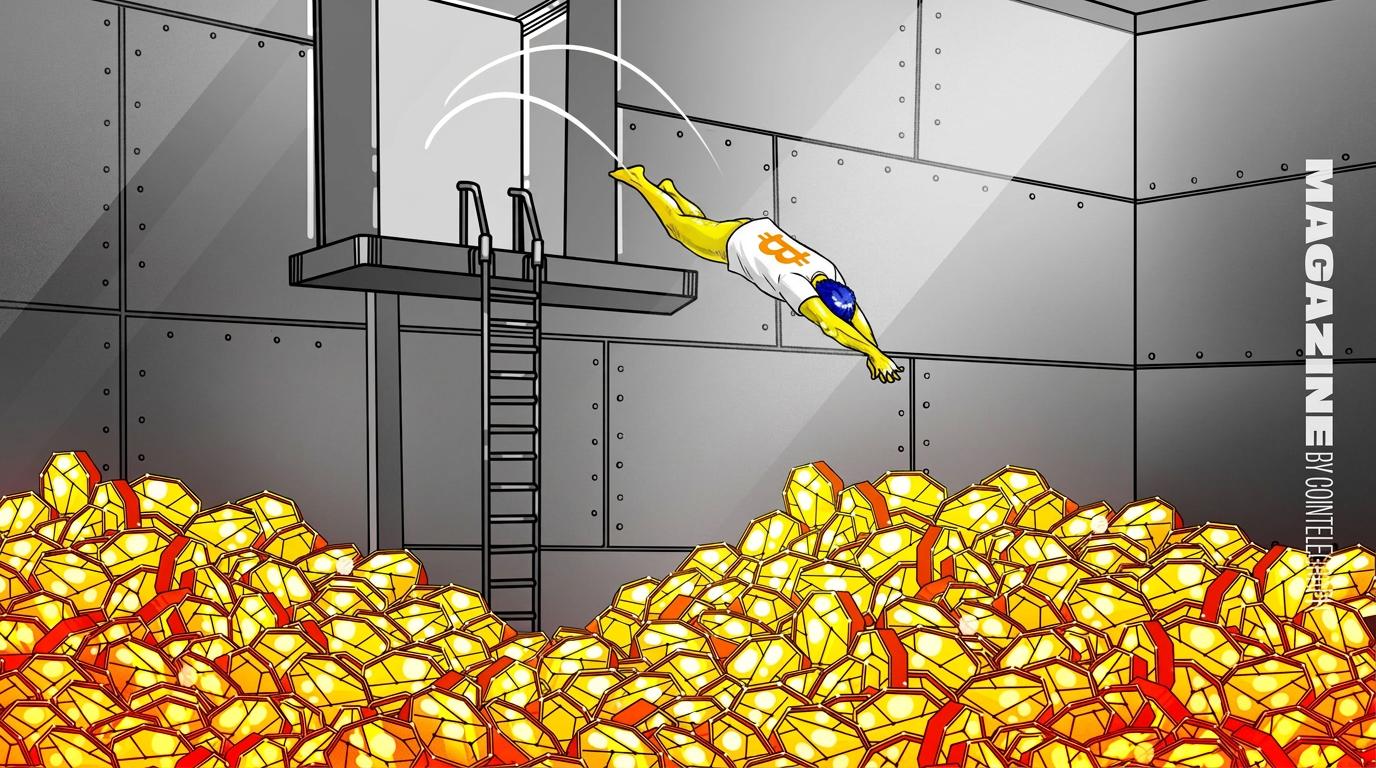
A US fusion startup claims to have achieved what alchemists dreamed of for centuries—converting mercury into gold. The implications for crypto are surprisingly relevant: if gold supply suddenly inflates through scientific breakthrough rather than mining, does Bitcoin's scarcity narrative become even more compelling?
The startup's claim hinges on nuclear fusion technology, a process that theoretically allows transformation of elements. If validated at scale, this discovery could fundamentally challenge gold's status as a finite resource. That matters more than it sounds, especially to the crypto market.
Gold's "Infinite Mint Bug"
Here's where this gets interesting for Bitcoin holders. Gold has long held the status of the ultimate scarce asset—limited by geology, mining difficulty, and the earth's crust. It's the benchmark that Bitcoin advocates point to when arguing that BTC represents "digital gold." The narrative goes: gold is valuable because it's hard to produce and doesn't inflate rapidly. Bitcoin echoes this same promise—21 million coins, no more, mathematically enforced.
But if scientific advancement can suddenly multiply gold supplies through transmutation rather than extraction, the entire foundation of gold's value proposition starts cracking. This is what we'd call gold's "infinite mint bug"—the theoretical exploit that breaks the scarcity model.
What This Means for Bitcoin's Value Proposition
Bitcoin advocates have always positioned the asset as superior digital gold precisely because its supply constraint is absolute and unhackable. You can't mine more Bitcoin by inventing new physics. The protocol enforces the 21 million cap through cryptographic consensus, not hope or regulation.
A breakthrough in transmuting elements wouldn't change Bitcoin's supply schedule one bit. That immutability becomes the selling point. While traditional gold could theoretically be mass-produced in laboratories, Bitcoin's code remains fixed—locked in by thousands of nodes running the same version across the globe.
This isn't just theoretical posturing. The crypto market has historically reacted to gold-related news, especially anything touching on inflation or supply dynamics. If institutional investors—who've traditionally viewed gold as the ultimate portfolio hedge—start doubting gold's scarcity, they might reassess where their digital store-of-value allocation belongs.
The Practical Angle
Before we get too excited, a few reality checks: the startup hasn't released peer-reviewed results. Scaling transmutation to commercially viable levels would require enormous energy inputs, likely making the process economically unfeasible compared to gold mining. But in the realm of crypto analysis and market psychology, feasibility sometimes matters less than perception.
Traders and institutions positioning for a world where traditional assets face new uncertainties are already factoring alternative scenarios into their portfolios. Bitcoin's absolute scarcity—enforced by mathematics rather than physics—becomes a more attractive hedge in that world.
Alpha Take
If this transmutation technology proves real and scalable, it invalidates one of gold's core value propositions while simultaneously strengthening Bitcoin's. We're not saying the market will immediately reprrice, but this is exactly the kind of macro narrative shift that influences portfolio reallocation toward crypto assets. Watch for institutional commentary on this over the coming months—that'll tell us whether this fusion breakthrough becomes meaningful for Bitcoin valuation.
Originally reported by
CoinTelegraph
Not financial advice. Crypto investing involves significant risk. Past performance does not guarantee future results. Always do your own research.