
Federal Regulators Clash With Arkansas Over Kalshi's Prediction Market Status
The Department of Justice and Commodity Futures Trading Commission have jointly sued Arkansas, seeking to block the state's enforcement action against Kalshi, the crypto-native prediction market platform. This regulatory showdown underscores a critical tension in crypto markets: when state-level ga
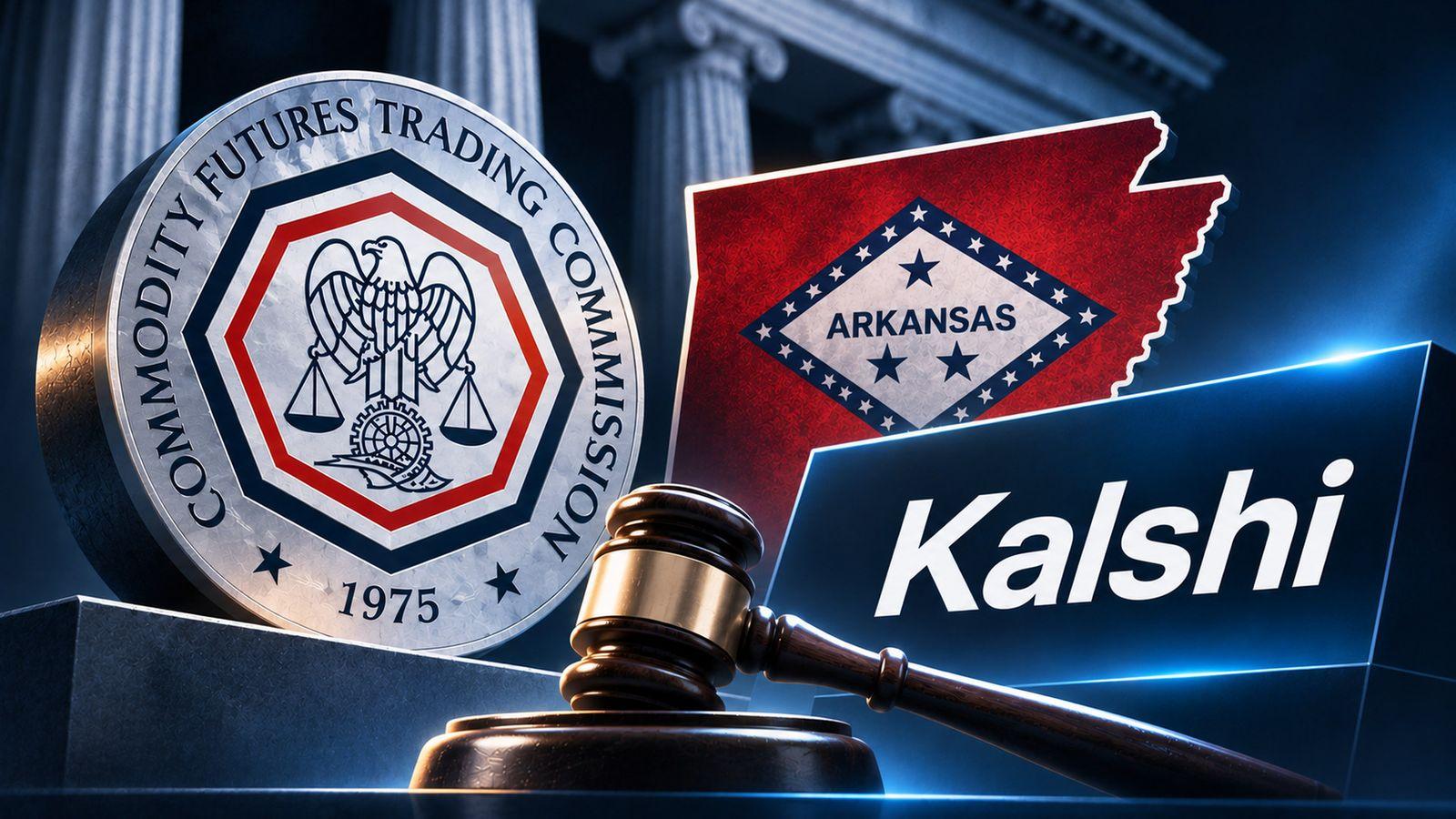
The Department of Justice and Commodity Futures Trading Commission have jointly sued Arkansas, seeking to block the state's enforcement action against Kalshi, the crypto-native prediction market platform. This regulatory showdown underscores a critical tension in crypto markets: when state-level gambling laws collide with federal commodity regulation.
Arkansas filed its own lawsuit against Kalshi on November 4, accusing the platform of operating an illegal gambling operation within state borders. The state's aggressive stance put it directly at odds with federal authorities who view prediction markets through a different regulatory lens.
The Federal Argument
The DOJ and CFTC's intervention signals their position that Kalshi operates within their jurisdictional authority as a federally-regulated platform for trading commodities contracts. The agencies are essentially arguing that Arkansas lacks the legal standing to unilaterally block a platform that already operates under federal oversight.
This is a crucial distinction for crypto trading platforms. Kalshi received CFTC approval for its binary options contracts—instruments that allow traders to bet on specific outcomes like weather events, sports results, or economic indicators. From the federal perspective, these are financial derivatives, not gambling.
Arkansas's Gambling Concern
The state of Arkansas didn't view it that way. Its complaint alleged that Kalshi's contracts were functionally equivalent to gambling instruments—specifically claiming the platform enabled illegal wagering without proper state licensure or consumer protections that Arkansas gambling laws require.
This creates a direct conflict: Arkansas sees prediction markets as unregulated gambling that threatens consumers within its jurisdiction. The federal regulators counter that prediction markets serve legitimate hedging and price discovery functions in commodity markets.
What This Means for Crypto Markets
The case reflects broader regulatory uncertainty plaguing the crypto and digital assets space. While Bitcoin and Ethereum operate as decentralized assets with their own regulatory complexities, platforms offering crypto-related derivatives and prediction markets face this state-versus-federal jurisdictional battle.
If Arkansas prevails, it opens the door for other states to independently regulate or ban prediction market platforms operating in their territory—fragmenting the market. Conversely, if federal regulators successfully preempt Arkansas, it reinforces that the CFTC's authority supersedes state gambling laws for federally-approved trading platforms.
For traders and portfolio managers, this litigation carries real consequences. Kalshi's service availability, the platform's regulatory status, and ultimately the viability of prediction market trading as an asset class all hang in the balance.
The prediction market space has grown considerably within crypto trading circles, particularly among traders seeking alternative instruments beyond traditional Bitcoin and Ethereum exposure. Platforms offering these products operate in regulatory gray areas precisely because of questions like those Arkansas raised.
Alpha Take
This lawsuit epitomizes how the crypto industry outpaces regulatory frameworks—traditional gambling statutes suddenly govern markets that barely existed a decade ago. Watch closely: a federal victory here validates CFTC primacy over state-level crypto enforcement, potentially reshaping how other states approach emerging trading platforms. This decision will likely influence crypto market intelligence and risk assessment for institutional traders evaluating platform legitimacy and regulatory tailwinds.
Originally reported by
The Block
Not financial advice. Crypto investing involves significant risk. Past performance does not guarantee future results. Always do your own research.