
Kalshi Cuts Ties with Trump Jr. Over Undisclosed Polymarket Stake: Conflict of Interest Concerns Mount
Kalshi, the crypto derivatives exchange, has terminated Donald Trump Jr. 's advisory position following revelations about his undisclosed investment in Polymarket, a competing prediction market platform.
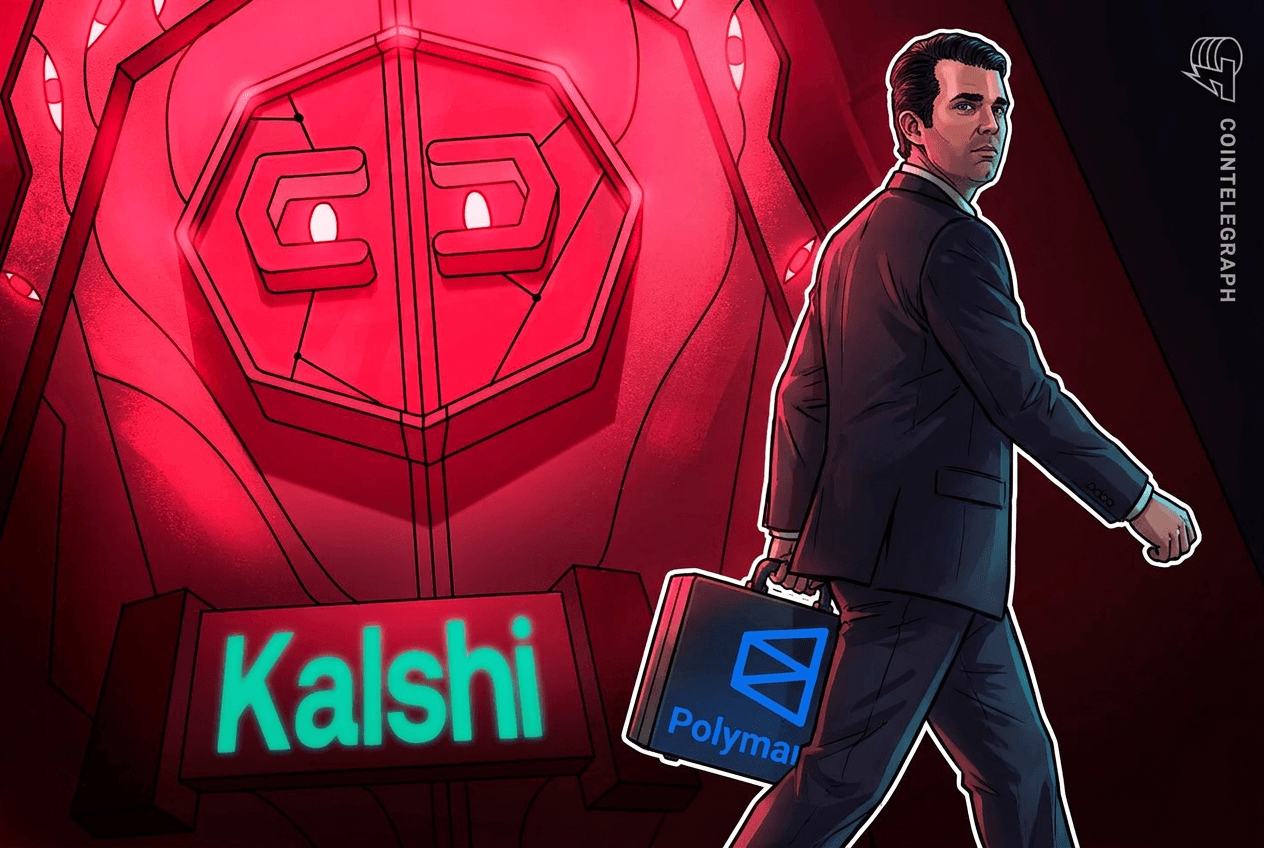
Kalshi, the crypto derivatives exchange, has terminated Donald Trump Jr.'s advisory position following revelations about his undisclosed investment in Polymarket, a competing prediction market platform. The move underscores growing tensions around conflicts of interest in the rapidly consolidating crypto trading ecosystem.
According to Reuters reporting, Kalshi ended the relationship after discovering Trump Jr.'s financial stake in Polymarket—a rival platform offering similar prediction market services. The termination highlights how crypto exchanges are increasingly scrutinizing advisor relationships, particularly when those advisors hold competing investments that weren't previously disclosed.
The Polymarket Connection
Polymarket has emerged as one of crypto's hottest platforms, capturing significant market share in the prediction market space. The platform allows users to bet on real-world outcomes, from political events to sports results. Trump Jr.'s involvement with the platform—combined with his advisory role at Kalshi—created an obvious conflict that management couldn't ignore.
What makes this particularly significant for crypto market intelligence: prediction markets are becoming major drivers of on-chain activity and sentiment analysis. When key figures hold stakes in competing platforms without transparency, it raises red flags about whose interests they're actually serving.
Transparency Issues in Crypto Advisory Structures
This incident reflects a broader pattern we're watching across the crypto industry. As digital assets mature and attract high-profile personalities, the lines between advisory roles and personal investments often blur. Kalshi's swift action suggests the exchange is taking governance seriously—but it also raises questions about due diligence processes upfront.
The crypto sector has been plagued by disclosure failures in the past. From FTX executives' undisclosed trading positions to venture capital firms investing in projects they're also advising, the pattern repeats. Kalshi's move to cut ties demonstrates that at least some platforms are attempting to break that cycle.
Market Context
The broader crypto market continues its typical volatility. Bitcoin is trading around $71,480, down 3.68%, while ethereum sits at $2,014, off 2.65%. Meanwhile, Solana trades at $81.47 (down 3.31%), and other major assets like XRP, BNB, and ADA are showing red across the board. These price pressures add context to why exchanges are tightening governance—when crypto markets struggle, investor confidence in institutional credibility becomes paramount.
For traders and portfolio managers, governance transparency isn't just corporate theater. It directly impacts platform reliability and decision-making integrity. A platform where advisors hold hidden stakes in competitors is one where information asymmetries favor insiders.
Alpha Take
This episode signals that crypto exchanges are finally treating conflict-of-interest policies with the seriousness they deserve. For portfolio managers tracking Kalshi and Polymarket, pay attention to how these platforms differentiate themselves on transparency moving forward—it'll likely become a competitive advantage. When crypto advisory roles lack proper disclosure frameworks, it's a yellow flag for platform credibility and user protection standards. Expect more scrutiny on advisor holdings across the industry as institutional capital continues flowing into prediction markets and derivatives trading.
Originally reported by
CoinTelegraph
Not financial advice. Crypto investing involves significant risk. Past performance does not guarantee future results. Always do your own research.