
Singapore Court Shuts Down Harassment Campaign in Resupply DeFi Dispute
A Singapore court has cracked down hard on two crypto figures caught spreading allegations and false claims tied to the messy fallout from the 2025 Resupply protocol exploit. This marks a rare instance of DeFi drama spilling into formal legal territory—and courts actually enforcing consequences.
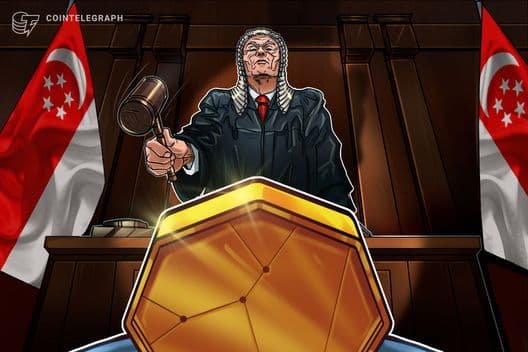
A Singapore court has cracked down hard on two crypto figures caught spreading allegations and false claims tied to the messy fallout from the 2025 Resupply protocol exploit. This marks a rare instance of DeFi drama spilling into formal legal territory—and courts actually enforcing consequences.
The Court Order
On March 24, Singapore's Protection from Harassment Court issued an order prohibiting OneKey founder Wang Lei and X user "web3feng" from posting threatening, defamatory, or false statements about Curve-linked contributor Haowi Wong. The court handed down a total of 2,500 Singapore dollars (approximately $1,900) in compensation and costs, with payment due by April 7. The order bars any further abusive, insulting, or threatening communications from both respondents.
This isn't theoretical—it's an actual judicial restraint on what these parties can publicly say about each other in the crypto market intelligence space.
What Triggered the Legal Action
The drama started after June 2025, when Resupply's wstUSR market fell victim to a price manipulation vulnerability. The exploit drained roughly $9.6 million from the protocol, creating a DeFi casualty that grabbed attention across the sector. Because Resupply integrated with Curve infrastructure (specifically cvcrvUSD and vault integrations), some market participants started connecting dots—rightly or wrongly—between the two projects.
Curve founder Michael Egorov quickly clarified that no Curve personnel were involved with Resupply, but the damage to reputation and community trust was already done. What followed was a cascade of online accusations, finger-pointing, and increasingly hostile allegations.
The Escalation
According to Haowi Wong's statement to Cointelegraph, the situation deteriorated significantly after the exploit dropped. Wang Lei and the @web3feng account launched what Wong characterizes as "continuous attacks and serious allegations," spreading claims he disputes as false and damaging to his reputation within the ecosystem.
"In an industry where trust is of fundamental importance, the repeated spread of misinformation carries real consequences," Wong said—a statement that perfectly captures why this legal action mattered.
Curve Finance itself weighed in, distinguishing between legitimate criticism and outright defamation: disputes in crypto "can cross the line between legitimate and well-founded criticism and outright falsehoods and defamation," the company told Cointelegraph. Distorted claims, Curve argued, undermine ecosystem trust and harm participants across the board.
Neither Wang Lei nor the @web3feng account operator responded to requests for comment.
Alpha Take
This Singapore court ruling signals a shift in how the crypto sector handles public disputes—bad faith actors can no longer hide behind anonymity or "it's just blockchain criticism." When allegations cross into demonstrable defamation tied to a $9.6M exploit, courts are willing to intervene. For traders and portfolio managers tracking DeFi ecosystem health, this means: verify claims independently, especially when key figures are making accusations about protocols or contributors during volatile periods. Misinformation around exploits can spike volatility and create false narratives that move markets.
Originally reported by
CoinTelegraph
Not financial advice. Crypto investing involves significant risk. Past performance does not guarantee future results. Always do your own research.