
South Korea's Crackdown on Algorithmic Trading: API Bots Now Drive 30% of Crypto Volume
South Korea's Financial Supervisory Service (FSS) just revealed that API-based trading accounts for roughly 30% of crypto market turnover—and regulators are done watching from the sidelines. The watchdog flagged systematic manipulation tactics and announced it's launching targeted investigations in
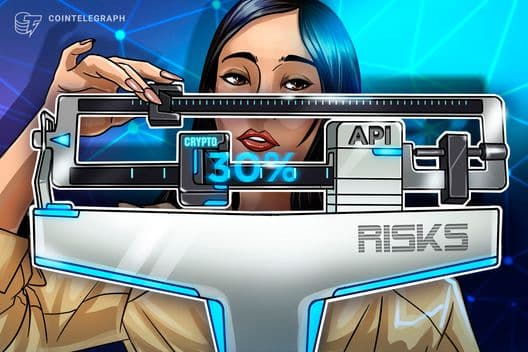
South Korea's Financial Supervisory Service (FSS) just revealed that API-based trading accounts for roughly 30% of crypto market turnover—and regulators are done watching from the sidelines. The watchdog flagged systematic manipulation tactics and announced it's launching targeted investigations into accounts showing suspicious automated trading patterns.
The Manipulation Playbook
Here's what's happening on the ground: traders are deploying APIs to execute coordinated schemes that distort price discovery. According to Yonhap News Agency and Maeil Business Newspaper reports, the FSS documented several abuse vectors:
Wash trading via tiny orders: Traders pump out repetitive micro-transactions (think 5,000 won to 10,000 won, or $3-$6 each) to fake liquidity and draw in retail investors before dumping at inflated prices.
Spoofed limit orders: Placing higher-priced buy orders to artificially push prices upward without actual intent to fill.
Coordinated multi-account schemes: Operating across numerous wallets to simulate organic demand.
The FSS highlighted one case where a trader set a target price and systematically submitted higher bids to mechanically drive the market there. These aren't edge cases—they're systemic. The regulator warned investors against blindly using high-frequency trading code found online and flagged sudden price spikes lacking fundamental catalysts as red flags.
Regulatory Teeth Meeting Gaps
South Korea's enforcement machinery is accelerating, though not without friction. In April alone, authorities tightened the screws significantly:
April 7: Exchanges got orders to reconcile internal ledgers against actual holdings every five minutes after inspections exposed delayed balance checks and weak circuit-breaker systems.
April 8: The Financial Services Commission (FSC) identified that inconsistent withdrawal-delay exemption rules enabled fraudsters to move funds faster, with exempted accounts making up the bulk of voice phishing losses.
April 9: A South Korean court overturned a partial suspension of Upbit operator Dunamu, citing vague regulatory rules—a reality check that the legal framework still has teeth-cutting work ahead.
What This Means for the Market
The 30% API trading figure is substantial. That's not fringe activity; it's a meaningful chunk of total turnover now driven by bots executing predetermined logic. South Korea's pivot toward surveillance and enforcement signals a fundamental shift in how crypto exchanges operate in this jurisdiction.
The regulatory landscape remains patchy—courts are striking down orders for lacking clarity, which puts pressure on authorities to codify rules rather than rely on discretionary enforcement. But the FSS's warning cascade suggests patience is wearing thin. Expect more granular scrutiny of transaction patterns, account correlations, and API usage metrics going forward.
Retail investors caught chasing momentum into orchestrated pumps will bear the losses. Professional traders using legitimate algo strategies will face higher compliance friction. And exchange operators? They're caught between Seoul's tightening rules and technical constraints that make real-time detection tough.
Alpha Take
API trading at 30% of turnover represents real structural manipulation risk in South Korean crypto markets—regulators aren't overreacting. The FSS's documented tactics (wash trading, spoofed orders, coordinated accounts) are textbook market abuse, and enforcement gaps are closing fast. Traders in this jurisdiction need to audit their automation now; retail investors should assume price spikes driven by bot activity are suspect until proven otherwise.
Originally reported by
CoinTelegraph
Not financial advice. Crypto investing involves significant risk. Past performance does not guarantee future results. Always do your own research.