
Blockchain Association Takes Fed to Supreme Court Over Banking Access Rights
The Blockchain Association is stepping into a high-stakes legal battle, backing Custodia Bank's challenge against Federal Reserve gatekeeping over direct access to payment systems. This fight cuts to the heart of whether regulators can arbitrarily block eligible state-chartered institutions from Fe
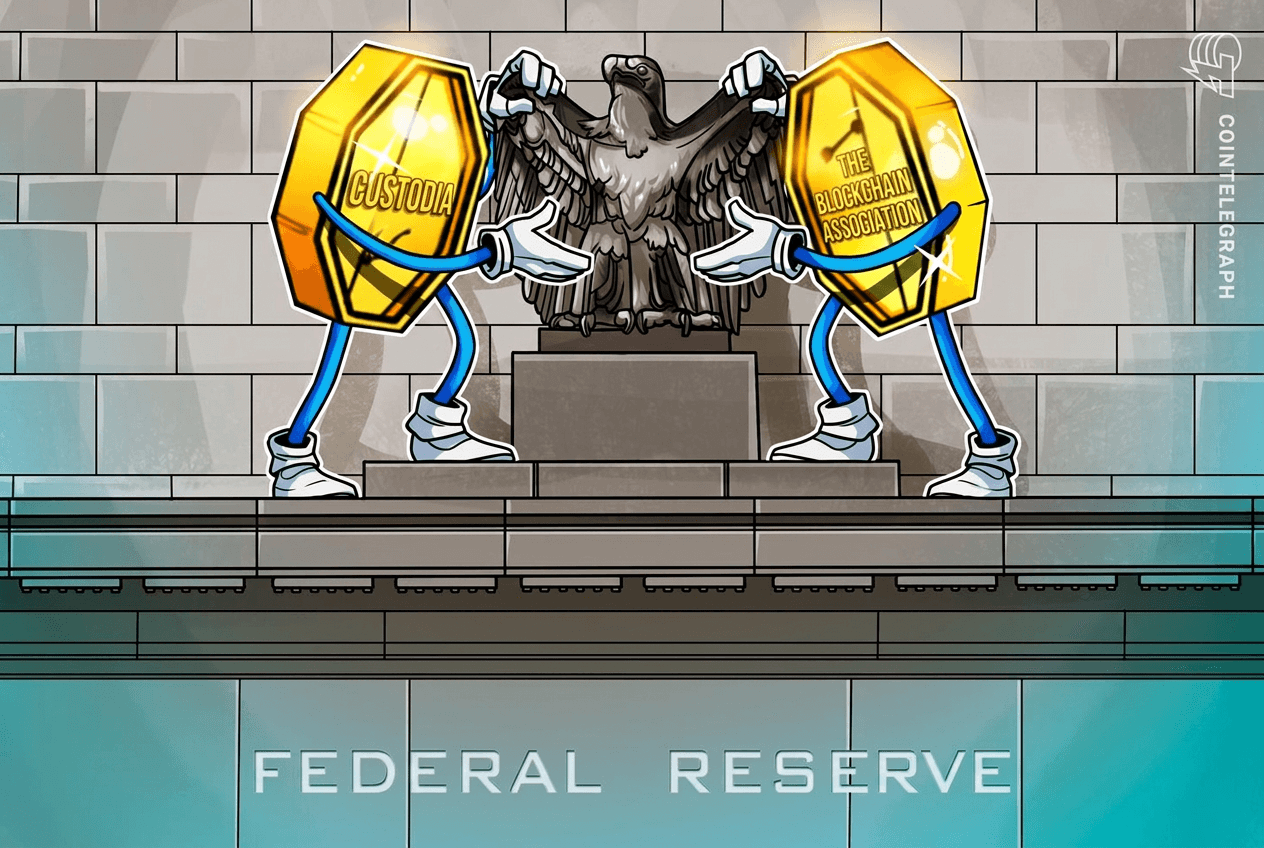
The Blockchain Association is stepping into a high-stakes legal battle, backing Custodia Bank's challenge against Federal Reserve gatekeeping over direct access to payment systems. This fight cuts to the heart of whether regulators can arbitrarily block eligible state-chartered institutions from Fed infrastructure.
Here's what's happening: Custodia, a Wyoming-chartered bank designed to serve crypto businesses, applied for access to the Federal Reserve's payment system—a critical piece of banking infrastructure. The Fed effectively blocked them, citing vague concerns about crypto exposure. Now the case is headed to the Supreme Court, and the Blockchain Association is filing an amicus brief arguing the Fed's discretion is too broad.
The Core Issue
The Blockchain Association's argument is straightforward: if a bank is state-chartered and meets banking standards, regulators shouldn't have unlimited power to deny them access based on speculative risk concerns. The Fed's current approach essentially gives it a veto over which financial institutions can operate, regardless of their eligibility under existing law.
This matters because direct Fed access fundamentally changes a bank's operational efficiency. Without it, institutions rely on correspondent banking relationships—slower, more expensive, and less transparent. For crypto-focused banks trying to bridge traditional finance and digital assets, this access is existential.
Why Custodia Matters for Crypto
Custodia isn't just another startup. It represents an attempt to create a legitimate banking bridge between crypto and traditional finance. A hostile Fed stance signals to the entire industry that regulatory uncertainty, not actual risk assessment, drives access decisions.
The Blockchain Association's involvement signals the broader crypto community sees this as a precedent-setting case. If the Fed can deny access to qualified institutions on discretionary grounds, it establishes a dangerous playbook: regulators can freeze out entire sectors of banking without formal rule-making or transparent criteria.
Supreme Court Stakes
The Supreme Court's decision will likely address whether the Federal Reserve has authority to impose unstated conditions on bank access beyond what's explicitly required by law. This shapes not just Custodia's future, but how regulators interact with emerging financial infrastructure across crypto and fintech.
A win for Custodia forces the Fed to apply transparent, consistent standards. A loss entrenches regulatory discretion and potentially signals that crypto-adjacent banking faces structural headwinds regardless of compliance quality.
What This Means for Crypto Market Intelligence
For traders and portfolio managers, this case signals whether traditional banking infrastructure will remain effectively closed to crypto businesses or gradually open based on merit. A Supreme Court ruling clarifying Fed authority could unlock significant liquidity and institutional adoption, or cement the current fragmentation where crypto operates in parallel banking channels.
The timing matters too—as institutional capital eyes crypto more seriously, regulatory clarity around banking infrastructure becomes a price-discovery mechanism for the entire sector.
Alpha Take
The Blockchain Association's Supreme Court brief reflects growing frustration with regulatory gatekeeping that operates outside formal rules. This case will likely define whether the Fed can indefinitely freeze out crypto-banking bridges through discretionary interpretation or must follow transparent legal standards. For crypto market participants, a favorable ruling could accelerate institutional adoption by removing artificial banking barriers—a material catalyst worth watching closely through the court calendar.
Originally reported by
CoinTelegraph
Not financial advice. Crypto investing involves significant risk. Past performance does not guarantee future results. Always do your own research.