
Blockchain.com and KuCoin Push Crypto Payment Infrastructure into Emerging Markets
Two major crypto platforms are making strategic moves to embed themselves deeper into emerging market payment systems—and it signals where the real adoption battle is being fought. Blockchain.
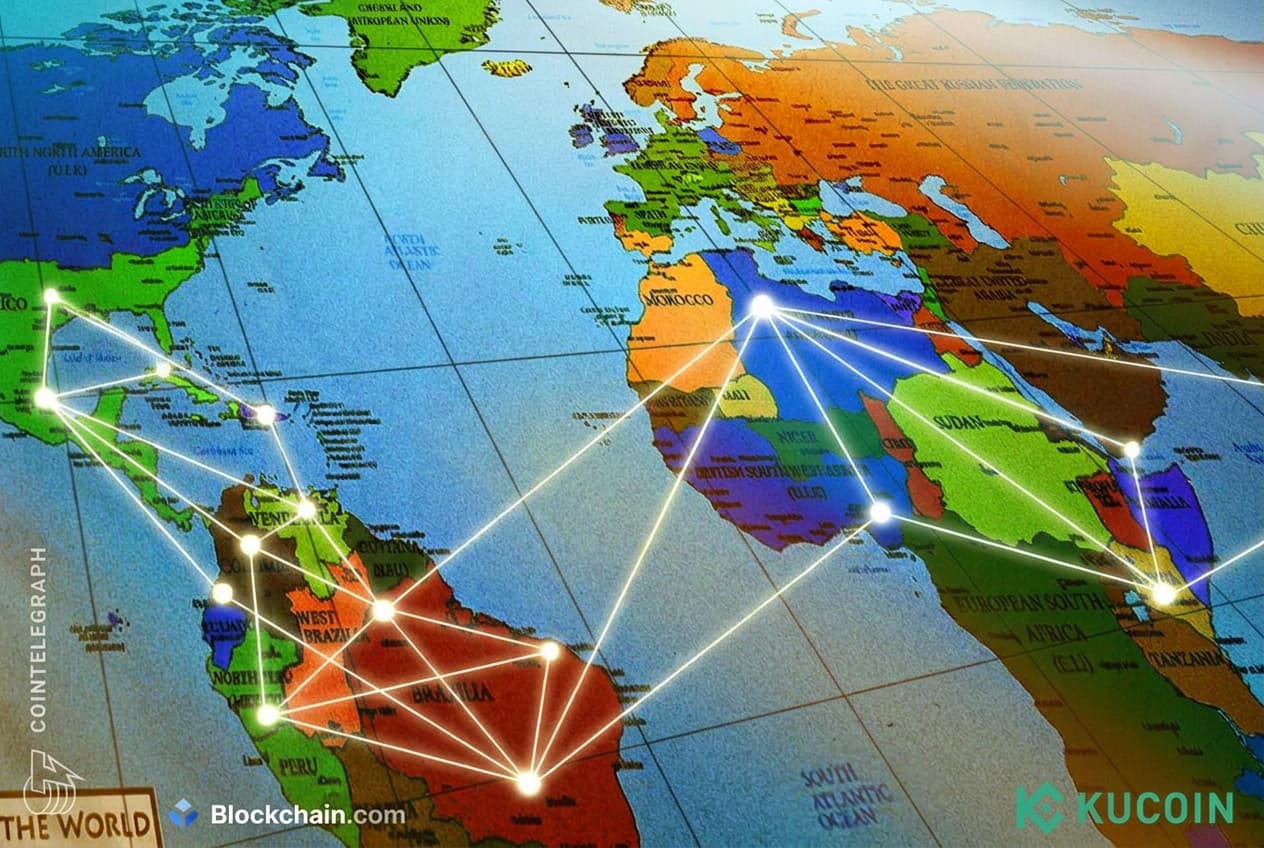
Two major crypto platforms are making strategic moves to embed themselves deeper into emerging market payment systems—and it signals where the real adoption battle is being fought.
Blockchain.com just launched a Brazil-focused payments platform designed specifically for businesses operating in Latin America's largest economy. Meanwhile, KuCoin is aggressively expanding its payment rail integrations across Mexico, Bangladesh, and Zambia, connecting directly with local banking and mobile-money networks.
Brazil Becomes Blockchain.com's Latin American Beachhead
Blockchain.com's Brazil play is significant because it's not just another wallet or exchange listing. The platform is building infrastructure specifically engineered for Brazilian businesses—meaning local currency rails, regulatory compliance tailored to Brazil's environment, and partnerships with payment processors that already have distribution there.
This matters for crypto adoption because most emerging market payment friction isn't about blockchain technology itself. It's about the last-mile problem: how do you get fiat in and out of crypto ecosystems when you don't have the banking infrastructure that exists in developed markets?
By launching a Brazil-specific platform, Blockchain.com is essentially saying: we're going to handle that friction for you. Businesses get access to crypto's benefits—faster settlement, reduced intermediaries, cross-border efficiency—without needing to navigate Byzantine banking systems or maintain multiple payment vendors.
KuCoin's Multi-Market Blitz
KuCoin's strategy is broader but following the same playbook. The exchange is rolling out integrations across three distinct emerging markets, each with different payment landscapes:
Mexico represents the obvious choice—high remittance flows, crypto-curious population, and existing peer-to-peer payment culture. Integrating with Mexican banking and mobile networks means KuCoin can capture users who've been using traditional remittance services but want faster, cheaper alternatives.
Bangladesh is a different market entirely. Mobile money (through services like bKash) already handles significant transaction volume there. By integrating with these networks, KuCoin gains access to an existing payment infrastructure that's already trusted and widely used. They're not asking Bangladesh to adopt new technology—they're plugging into existing behavior.
Zambia extends KuCoin's reach into sub-Saharan Africa, where mobile money and crypto adoption rates are already climbing. Zambians increasingly use mobile networks for financial services, so integrating there creates a direct pipeline between local payment habits and crypto access.
Why This Matters for Crypto Adoption
These aren't headlines about token launches or exchange features. They're about removing friction from the actual on/off ramps that real users need. In emerging markets, crypto adoption stalls not because people don't understand blockchain—it stalls because the infrastructure to move money between their local currency and crypto is too expensive, too slow, or completely unavailable.
When Blockchain.com and KuCoin solve that problem, they're not just growing their user bases. They're expanding the total addressable market for crypto across regions where traditional banking is either inadequate or prohibitively expensive.
The companies that dominate emerging market crypto adoption won't be the ones with the fanciest tokens or most complex DeFi protocols. They'll be the ones who can move money reliably, cheaply, and quickly between local payment networks and crypto systems.
Alpha Take
Blockchain.com and KuCoin are playing the long game by addressing the actual bottleneck in crypto adoption—payment infrastructure, not technology. These strategic integrations across emerging markets represent a shift toward practical utility over speculative features. Watch for this pattern: crypto platforms winning market share in regions where incumbent financial services are weakest. This is where real, sustainable crypto adoption happens.
Originally reported by
CoinTelegraph
Not financial advice. Crypto investing involves significant risk. Past performance does not guarantee future results. Always do your own research.