
Cross-Chain Bridge: FalconX and Interstice Open Canton's Institutional Markets to Ethereum, Solana, and Robinhood Chain
FalconX has partnered with Interstice to deploy a non-custodial cross-chain swap engine that fundamentally reshapes how institutional capital accesses tokenized assets on Canton. The infrastructure directly connects Canton's institutional tokenized-asset markets with liquidity pools and trading act
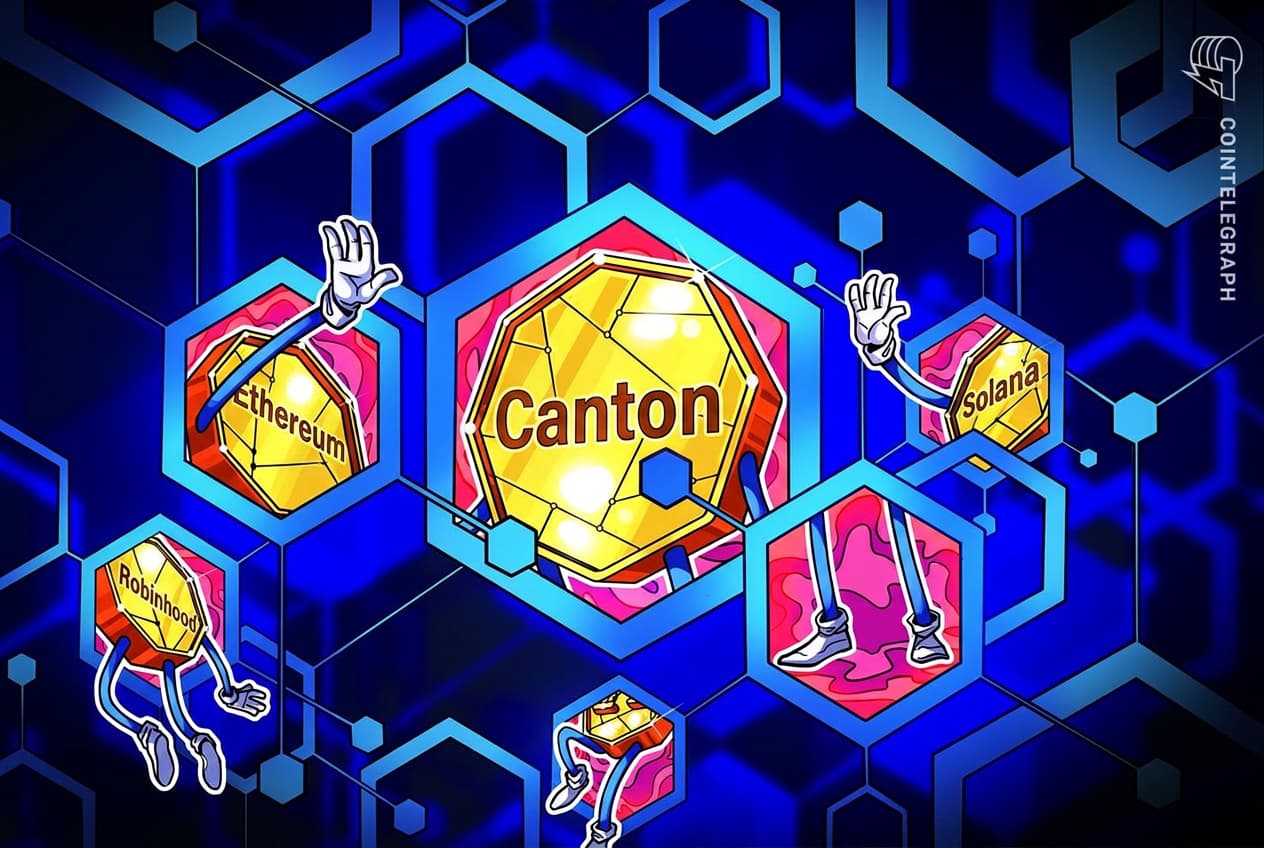
FalconX has partnered with Interstice to deploy a non-custodial cross-chain swap engine that fundamentally reshapes how institutional capital accesses tokenized assets on Canton. The infrastructure directly connects Canton's institutional tokenized-asset markets with liquidity pools and trading activity across Ethereum, Solana, and the emerging Robinhood Chain ecosystem.
Here's what matters for traders and portfolio managers: this bridge removes friction between siloed blockchain networks. Previously, institutional assets locked on Canton couldn't easily tap into the broader crypto liquidity landscape. Now they can.
The Non-Custodial Advantage
The "non-custodial" designation is critical. Unlike centralized exchanges that hold your assets during swaps, this engine lets institutions maintain custody of their tokens while executing cross-chain trades. You retain control. That's a massive difference for institutional players who treat custody as non-negotiable—especially post-FTX, when self-custody became table stakes for serious crypto operators.
FalconX, already known for facilitating institutional crypto trading and over-the-counter (OTC) services, brings its market-making muscle to this initiative. Interstice, the blockchain infrastructure specialist, handles the technical plumbing. Together, they've created a mechanism that lets Canton's institutional tokenized-asset markets—think bank deposits, securities, and other real-world assets tokenized on blockchain—flow seamlessly into major public blockchains.
Market Access Expanded
The integration with Ethereum, Solana, and Robinhood Chain is strategic. Ethereum remains the liquidity hub for institutional crypto activity. Solana offers speed and cost efficiency that appeals to high-frequency institutional traders. Robinhood Chain, backed by retail brokerage heavyweight Robinhood, signals institutional appetite for private blockchain infrastructure with broader market access.
This tri-chain approach means Canton's institutional users aren't choosing between networks anymore. They can route capital where liquidity is deepest and execution costs are lowest—real alpha for sophisticated traders managing nine-figure portfolios.
Why This Matters Now
Canton itself has been positioning as the institutional-grade blockchain for tokenized assets. This partnership validates that positioning. Without cross-chain liquidity access, Canton risks becoming a silo. With it, the network becomes genuinely useful for institutions managing complex, multi-chain portfolios.
The timing aligns with broader institutional crypto adoption. More banks and hedge funds are tokenizing real-world assets. They need reliable plumbing to move between networks based on where liquidity congregates. FalconX and Interstice are building exactly that infrastructure.
Alpha Take
This cross-chain bridge removes a structural barrier that's hampered institutional crypto adoption—the ability to access deep liquidity across multiple networks without custody risk. For traders, it means Canton's institutional assets now have an on-ramp to Ethereum and Solana's mature trading ecosystems. Watch this playbook: expect more blockchain infrastructure plays that solve interoperability, not by forcing users onto single chains, but by letting capital flow frictionlessly across them.
Originally reported by
CoinTelegraph
Not financial advice. Crypto investing involves significant risk. Past performance does not guarantee future results. Always do your own research.