
De-Extinction Startup Says Artificial Womb Tech Is Nearing Breakthrough—Here's Why It Matters for Biotech Crypto
De-extinction outfit Colossal is pushing hard on a tech that sounds like science fiction: an artificial womb system designed to support full mammal development. According to the company's leadership, they're deep in the endgame on this project.
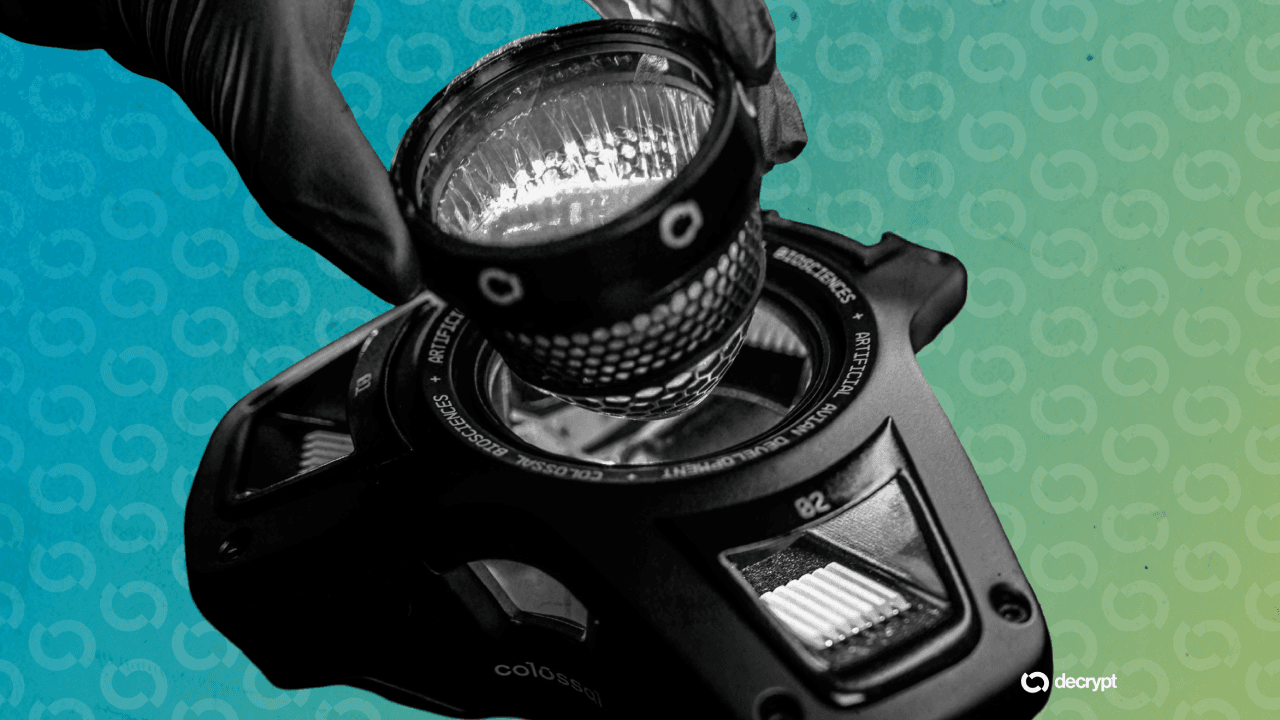
De-extinction outfit Colossal is pushing hard on a tech that sounds like science fiction: an artificial womb system designed to support full mammal development. According to the company's leadership, they're deep in the endgame on this project.
The startup, which has garnered significant attention (and funding) for its ambitious genetic resurrection goals, claims the artificial womb is now at what CEO Ben Lamm describes as the "one-yard line"—crypto speak for being very close to a major milestone. The implication: functional mammal development support is within striking distance.
Here's what matters: This tech could have massive implications beyond just bringing back woolly mammoths. If Colossal nails this, we're looking at foundational biotech infrastructure that touches reproduction, preservation, and genetic science. That's the kind of breakthrough that moves markets—particularly in the biotech venture space where institutional capital increasingly overlaps with crypto-native funding models.
Colossal's core mission remains audacious: resurrect extinct species by using genetic engineering and AI-driven DNA sequencing. But the artificial womb isn't just a vanity project. The company has positioned itself as a serious biotech player, securing substantial venture capital to push the technical boundaries. The artificial womb represents one of their most concrete engineering deliverables to date.
The company has been transparent about the technical hurdles: artificial womb technology requires solving problems in oxygenation, nutrient delivery, pressure regulation, and waste removal—essentially replicating the placental environment at scale. Getting mammals to develop successfully outside natural biological systems demands precision across multiple variables simultaneously.
What Colossal hasn't fully detailed is the exact timeline for real-world deployment or the species being used for testing. That's typical for biotech firms working on cutting-edge tech—you don't broadcast every technical failure publicly. But the CEO's "one-yard line" comment suggests they're confident in near-term progress announcements.
For the broader biotech and crypto ecosystems, this matters because Colossal represents a growing intersection: venture-scale biotech companies increasingly open to blockchain-based funding, tokenized equity models, and crypto-native investors. If Colossal's artificial womb tech succeeds, it becomes a proof point that crypto capital can fuel legitimate breakthrough biotech research—not just speculation.
The company has raised significant funding from traditional VCs and strategic partners. But the biotech space is starting to see more tokenized participation models emerging. Success here could accelerate that trend.
The real question isn't whether Colossal can build an artificial womb—it's whether they can make it economically viable and scalable. That's where the real innovation lies. And that's what separates credible biotech from hype.
Alpha Take
Colossal's artificial womb milestone is less about woolly mammoths and more about signaling that serious biotech infrastructure is being built with progressive funding models. Watch for tokenization announcements or crypto-native investor participation increases as proof of this tech reaching viability. This is one to track if you're analyzing the convergence of biotech innovation and crypto capital markets.
Originally reported by
Decrypt
Not financial advice. Crypto investing involves significant risk. Past performance does not guarantee future results. Always do your own research.