
Google's AI Breakthrough Transforms Industrial Robots Into Smarter Workplace Assets
Google just dropped a significant upgrade to its Gemini Robotics AI model, and it's reshaping what's possible in industrial automation. The advancement centers on enhanced spatial reasoning and task planning—two capabilities that directly translate to more autonomous, efficient robotic systems in m
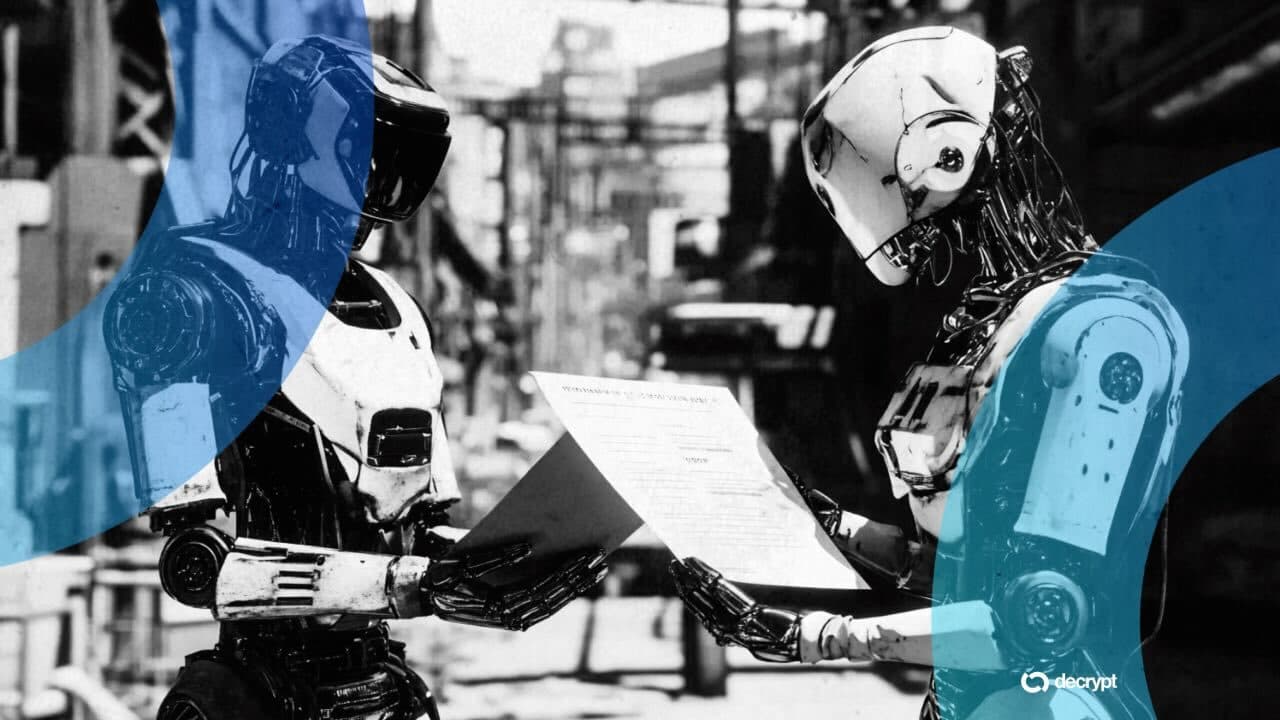
Google just dropped a significant upgrade to its Gemini Robotics AI model, and it's reshaping what's possible in industrial automation. The advancement centers on enhanced spatial reasoning and task planning—two capabilities that directly translate to more autonomous, efficient robotic systems in manufacturing and logistics environments.
Here's why this matters for the broader tech and crypto landscape: as AI continues advancing, infrastructure demands spike. Data centers, computing power, and blockchain solutions that facilitate trustless coordination between autonomous systems are becoming increasingly valuable. We're watching the convergence of AI sophistication and distributed systems that could reshape how industrial operations scale.
The Core Upgrade: What Changed
Google's latest iteration of Gemini for robotics isn't just incremental. The model now demonstrates superior spatial awareness—meaning robots better understand their physical environment, anticipate obstacles, and optimize movement paths without constant human intervention. Equally important is the improved task planning. Rather than executing rigid, pre-programmed sequences, these robots can break down complex industrial objectives into logical sub-tasks and adapt when conditions shift.
This represents a material jump from previous generations that relied heavily on supervised learning and rule-based frameworks. By leveraging transformer architecture and multimodal training, Gemini enables robots to reason about consequences before acting—a critical distinction in high-stakes industrial settings.
Industrial Applications on the Horizon
The practical implications ripple across manufacturing floors globally. Assembly line operations, warehouse logistics, and quality control processes all benefit from robots that can interpret ambiguous instructions and handle unexpected scenarios. We're talking about systems that can learn new tasks faster, require less recalibration between production runs, and operate with minimal human oversight.
Companies deploying these systems see immediate gains: reduced downtime, higher throughput, and improved workplace safety. Workers shift away from repetitive, dangerous tasks toward supervisory roles that demand human judgment.
The Broader Context: AI and Infrastructure Demands
This robotics breakthrough is part of a larger AI infrastructure expansion that's been reshaping enterprise technology spending. As organizations deploy more sophisticated AI models—whether in robotics, crypto analysis, or autonomous systems—computational demands escalate dramatically. That's pushing investment into data centers, GPU manufacturers, and blockchain-based coordination networks that enable distributed computing.
For crypto and blockchain observers, this trend matters. Smart contracts and decentralized systems increasingly coordinate industrial operations. As robots become smarter and more autonomous, trustless verification systems and transparent transaction records become competitive advantages. We're watching the early stages of AI-driven automation intersecting with distributed ledger technology.
Alpha Take
Google's Gemini robotics advancement accelerates the AI maturation curve we've been tracking. The jump in spatial reasoning and task planning capabilities removes friction from industrial automation—a sector that's been capital-heavy and change-resistant. As enterprises adopt smarter robotic systems, infrastructure demands intensify, creating secondary plays across data centers, semiconductor markets, and blockchain-based coordination platforms. For traders monitoring emerging tech trends, this represents a signal that AI-powered automation is transitioning from experimental to operationally critical.
Originally reported by
Decrypt
Not financial advice. Crypto investing involves significant risk. Past performance does not guarantee future results. Always do your own research.