
Reve 2.0: The AI Image Generator That's Forcing Competitors to Rethink Their Pricing Model
The crypto and fintech world has taught us one thing: disruption beats incumbency when you nail unit economics. Reve, the startup that already undercut Midjourney's pricing, is doing it again—this time with a 4K model that treats image generation like software architecture.
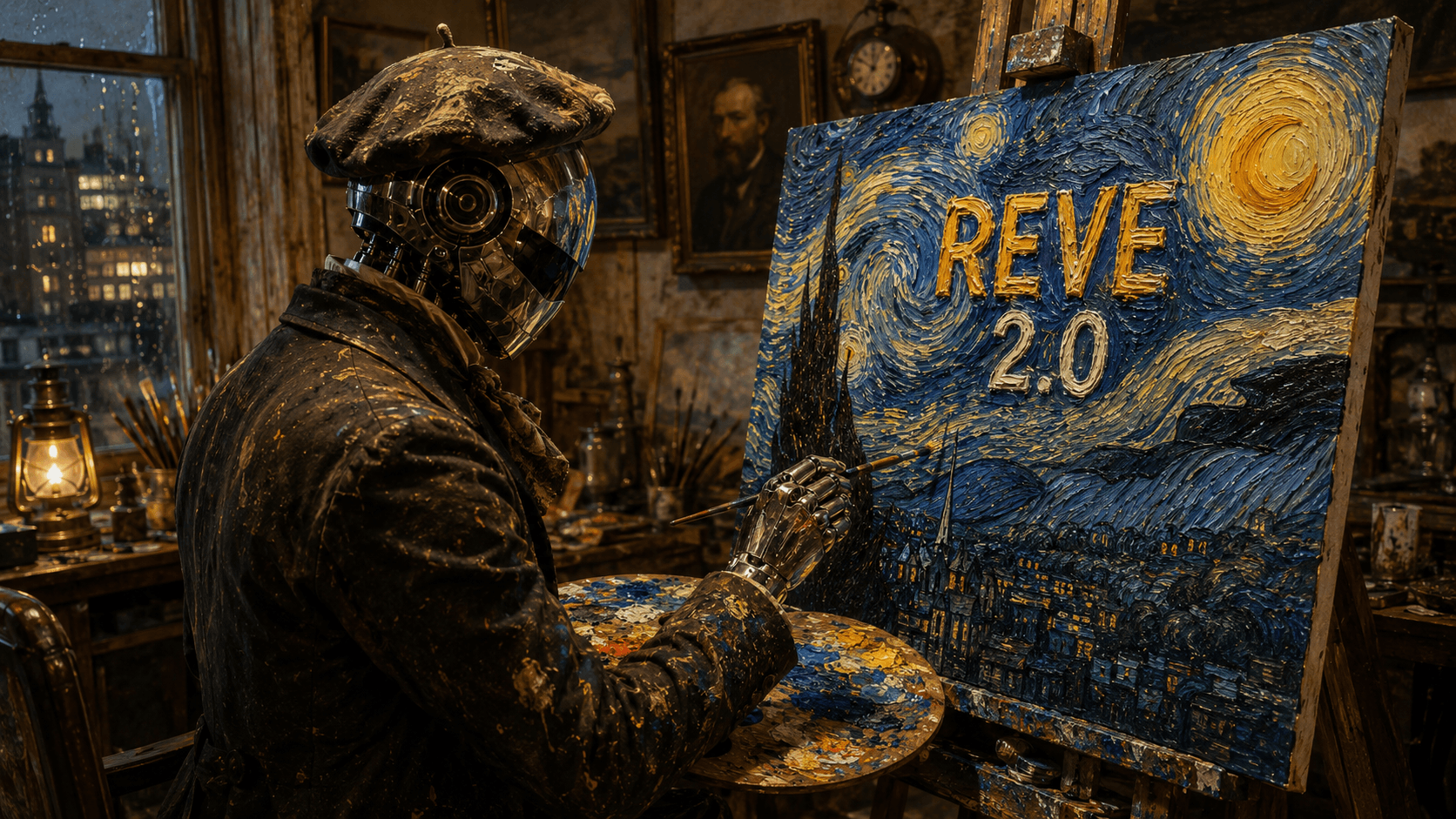
The crypto and fintech world has taught us one thing: disruption beats incumbency when you nail unit economics. Reve, the startup that already undercut Midjourney's pricing, is doing it again—this time with a 4K model that treats image generation like software architecture.
Here's what matters: Reve 2.0 introduces a fundamentally different approach to AI image creation through what they're calling "layout control." Instead of throwing prompts at a neural network and hoping for the best, users can now structure compositions the way developers structure code. Want specific elements in defined zones? You build the layout first, then populate it. The precision beats what Midjourney and DALL-E 3 currently offer.
The Economics Angle
Reve's original claim to fame was penny-per-image pricing—a bold move that forced the entire sector to justify their premium pricing models. With 2.0, they're not resting on that advantage. The new 4K capabilities and layout control represent genuine feature differentiation, not just a race-to-the-bottom pricing strategy. This matters for portfolio allocation: AI tooling startups that compete on price alone get crushed. Those adding structural improvements to workflows survive.
The market for AI image generation has bifurcated. Enterprise buyers (think design studios, ad agencies, crypto marketing teams building NFT collections) need reliability and control—not just cheaper pixels. Reve's layout system addresses that gap. Midjourney excels at artistic interpretation. Reve excels at execution of specific visions.
Why Refusal Rates Matter More Than You Think
We've noted something critical: Reve refuses fewer requests than rivals. In practical terms, this means higher uptime for workflows and fewer friction points in production pipelines. When you're running a 10,000-image batch for a brand campaign or crypto project launch, refusal rates directly impact ROI. A 5% refusal rate versus a 15% refusal rate isn't trivial—it's the difference between hitting deadlines and renegotiating contracts.
The crypto trading and fintech communities understand this intuitively. In algorithmic trading, execution matters more than theory. Reve's approach applies the same logic to creative AI: the system that actually produces reliable output wins market share.
Strategic Implications
Reve's trajectory suggests we're entering phase two of AI commoditization. Phase one was "AI tools exist." Phase two is "AI tools need to be useful for specific workflows." The 4K model with layout control isn't flashy, but it's exactly what professionals paying for crypto and market intelligence tools expect: boring reliability with measurable improvements.
For investors watching the AI tooling space, Reve represents the archetype worth tracking: low overhead, technical superiority in defined niches, pricing that undercuts incumbents without sacrificing margins.
Alpha Take
Reve 2.0's layout control system addresses a real workflow gap that Midjourney has ignored. Combined with lower refusal rates and aggressive pricing, this positions them as the preferred tool for production-scale image generation in crypto, fintech, and digital marketing. Watch whether design agencies and NFT projects actually migrate—adoption metrics matter more than feature announcements.
Originally reported by
Decrypt
Not financial advice. Crypto investing involves significant risk. Past performance does not guarantee future results. Always do your own research.