
Revolut's Customer Data Breach Exposes Critical Identity Verification Vulnerability
Revolut customers just got a harsh reminder about the evolving sophistication of social engineering attacks. The fintech platform confirmed that sensitive personal data—including passports, selfies, and complete financial transaction histories—was exposed to a fraudster who spoofed a government age
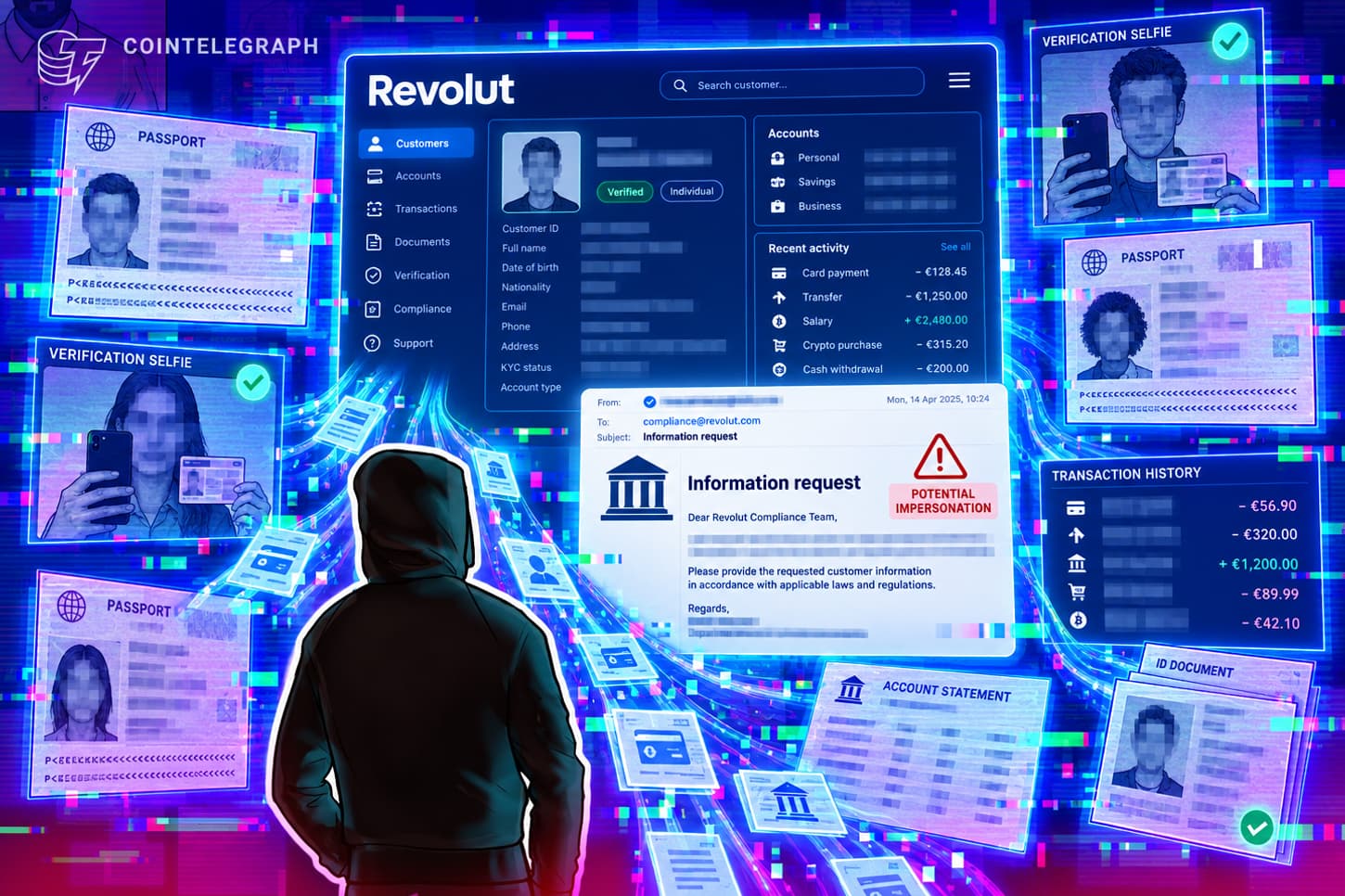
Revolut customers just got a harsh reminder about the evolving sophistication of social engineering attacks. The fintech platform confirmed that sensitive personal data—including passports, selfies, and complete financial transaction histories—was exposed to a fraudster who spoofed a government agency email domain.
This wasn't a technical hack. This was someone impersonating an official government entity, and it worked. The attack highlights a dangerous gap between Revolut's data protection processes and real-world threat vectors that crypto and traditional fintech users need to understand.
How the Attack Unfolded
The fraudster used a fake government email address to convince Revolut staff to hand over customer information. We're talking comprehensive identity documentation here—passport scans, selfies used for facial recognition verification, and detailed financial records showing transaction patterns. For crypto traders and investors holding assets through Revolut's platform, this exposure is particularly concerning given the sensitivity of transaction data linked to identity verification.
The company didn't explicitly name which government domain was mimicked, but the fact that internal staff fell for the impersonation tells you something important: even when you're dealing with regulated fintech platforms, human error remains a critical vulnerability in the security chain.
Implications for Crypto Market Users
Revolut has positioned itself as a bridge between traditional finance and crypto trading, letting users buy, hold, and trade bitcoin, ethereum, and other digital assets. A breach of this magnitude affecting identity documents and transaction histories creates multiple exploitation vectors. Fraudsters now have comprehensive profiles linking real identities to financial behavior—exactly what they need to execute targeted phishing campaigns, account takeovers on other platforms, or identity theft.
The exposure of selfies tied to official identity documents is particularly problematic in an era where deepfakes and synthetic identity fraud are becoming more sophisticated. Combined with transaction histories, these data points create a nearly complete dossier for social engineering attacks against other crypto platforms and financial services.
What Revolut Did (and Didn't) Do
The company acknowledged the incident and stated it was working to contact affected customers. They also emphasized that the number of customers impacted was "limited." However, the fact that the breach occurred at all through basic social engineering—not a zero-day exploit or sophisticated infrastructure compromise—raises serious questions about Revolut's internal security protocols and employee training.
For a platform handling both traditional finance and crypto trading, this is the kind of preventable incident that erodes customer trust faster than any market downturn.
Alpha Take
This breach underscores why crypto investors need to treat identity verification data as highly sensitive as the funds themselves. Even regulated platforms with strong security infrastructure can be compromised through social engineering. Consider limiting the sensitive documentation you store across platforms, use strong authentication where available, and monitor your accounts closely for unauthorized access attempts. The fact that this attack was human-engineered, not technically sophisticated, means similar attacks could target other fintech and crypto platforms—stay vigilant.
Originally reported by
CoinTelegraph
Not financial advice. Crypto investing involves significant risk. Past performance does not guarantee future results. Always do your own research.