
Russia's New Crypto Framework: Regulated Trading Legalized, But Payments Still Restricted
Vladimir Putin has signed a landmark piece of legislation that fundamentally reshapes Russia's crypto regulatory stance, legalizing regulated retail cryptocurrency trading while maintaining strict controls on domestic payments. The Split Approach: Trading Yes, Payments No The new law creates a
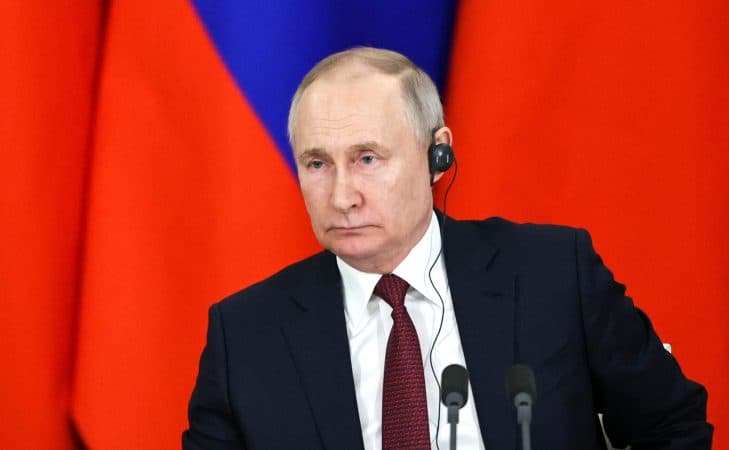
Vladimir Putin has signed a landmark piece of legislation that fundamentally reshapes Russia's crypto regulatory stance, legalizing regulated retail cryptocurrency trading while maintaining strict controls on domestic payments.
The Split Approach: Trading Yes, Payments No
The new law creates a clear bifurcation in Russia's crypto policy. On one hand, citizens can now legally engage in regulated cryptocurrency trading through approved platforms and brokers. On the other hand, the legislation continues its prohibition on using crypto as a medium of exchange for goods and services within Russia's borders—a restriction that remains firmly in place.
Here's the critical distinction: while Russians are barred from paying for everyday transactions with bitcoin, ethereum, or other digital assets domestically, they retain the ability to use crypto for cross-border settlements. This carve-out is significant for international commerce and capital flows, particularly as Russia navigates geopolitical sanctions and seeks alternative transaction channels.
Strategic Implications for Russia's Crypto Market
The legalization of regulated retail trading represents a substantial policy shift. Previously, Russia's crypto stance occupied murky regulatory territory, with citizens technically able to hold digital assets but facing ambiguity around trading activities. This new framework provides institutional clarity—a development that could attract both retail investors seeking legitimate market access and legitimate trading platforms looking to operate transparently within Russian borders.
The continued ban on domestic payments likely serves dual purposes. First, it preserves the ruble's monopoly as the official medium of exchange within Russia. Second, it prevents cryptocurrencies from becoming a tool for circumventing capital controls or sanctions enforcement mechanisms—a concern shared by many nations attempting to balance innovation with financial stability.
Cross-Border Settlement as the Real Play
The allowance for cross-border crypto settlements is arguably the most consequential provision. This opens pathways for Russian businesses and individuals to conduct international transactions in an environment where traditional banking channels face friction from sanctions. Whether this reflects strategic adaptation to geopolitical realities or simply pragmatic recognition of crypto's role in global finance remains open to interpretation.
For the broader crypto trading and market intelligence community, Russia's regulatory evolution matters. With a population of 146 million and significant technical talent, the legalization of regulated trading creates a material new market opportunity—one that could draw exchanges and platforms seeking to expand their geographic footprint and trading volumes.
Alpha Take
Putin's signature on this legislation signals that Russia views regulated crypto trading as strategically important, even while maintaining domestic payment restrictions. The framework creates arbitrage opportunities between domestic speculation and international settlement—watch for which exchanges and platforms move fastest to capture this regulated market. The cross-border settlement allowance could prove more economically significant than the retail trading provision, especially given Russia's current geopolitical circumstances and banking isolation.
Originally reported by
The Block
Not financial advice. Crypto investing involves significant risk. Past performance does not guarantee future results. Always do your own research.