
S&P Introduces New Blockchain Fundamentals Index—A Game-Changer for Protocol-Based Crypto Valuation
Standard & Poor's has rolled out a blockchain fundamentals index designed to track digital assets through an entirely different lens than traditional crypto indexes. Rather than relying on market capitalization weighting—the standard approach that dominates the space—this new benchmark focuses on p
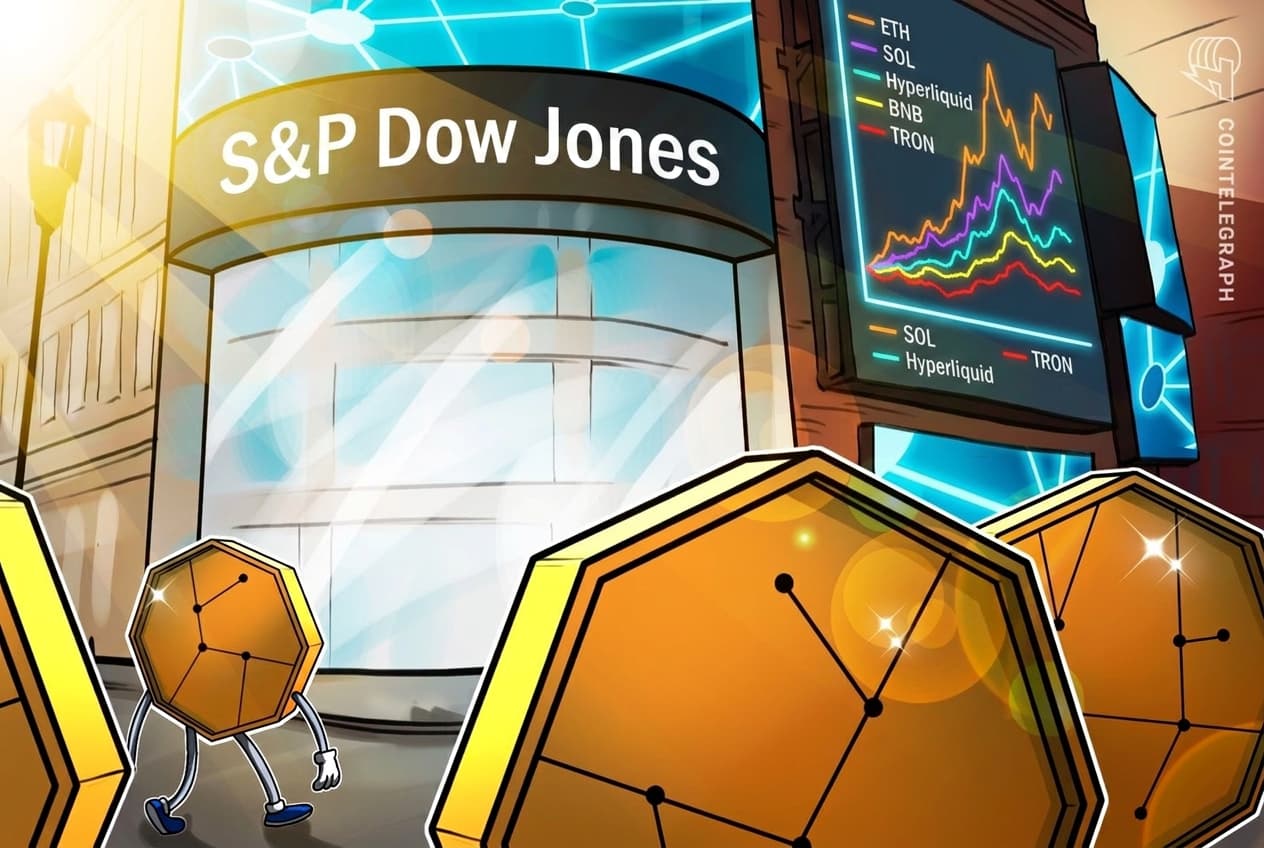
Standard & Poor's has rolled out a blockchain fundamentals index designed to track digital assets through an entirely different lens than traditional crypto indexes. Rather than relying on market capitalization weighting—the standard approach that dominates the space—this new benchmark focuses on protocol revenue as its core metric.
Why This Matters for Crypto Analysis
The move signals a significant shift in how institutional investors and traders might evaluate blockchain networks. Traditional market cap weighting has long been criticized for potentially overvaluing projects based on speculative sentiment rather than actual utility and economic productivity. By introducing protocol revenue as the foundation, S&P is offering portfolio managers and analysts a fundamentals-based alternative that could reshape crypto portfolio construction.
For years, crypto's valuation framework has relied heavily on market capitalization, which simply multiplies token price by circulating supply. This approach works fine for comparing relative sizes, but it tells you nothing about whether a network is actually generating economic value. Protocol revenue—fees earned by a blockchain network—provides a more tangible measure of economic activity and sustainability.
The Index Structure
The S&P blockchain fundamentals index tracks multiple blockchain networks by analyzing their protocol-generated revenue streams. This means networks that generate substantial transaction fees, staking rewards, or other economic outputs rank higher in the index, regardless of their total market value. It's closer to how traditional financial markets evaluate companies: by looking at earnings and cash flow generation rather than just stock price.
This approach could have meaningful implications for crypto analysis and market intelligence. It creates a data-driven framework that separates legitimately productive networks from those riding momentum. For traders and portfolio managers, this distinction matters—a lot. A protocol generating consistent revenue has different risk characteristics than one generating hype.
Institutional Adoption Potential
S&P's involvement is particularly significant. As one of the world's most influential index creators, their blockchain fundamentals index could gain real traction with institutional investors who've been waiting for more rigorous valuation methodologies in crypto. Many institutional players have cited the lack of standardized, fundamentals-based benchmarks as a barrier to larger capital allocation into digital assets.
The index provides an alternative framework that emphasizes on-chain economics over speculation-driven price movements. This could accelerate institutional adoption of crypto by offering a clearer, more defensible investment thesis.
What's Next for Crypto Indexes
We're likely to see more institutional players developing revenue-focused or fundamentals-based crypto indexes in the coming months. Once S&P makes a move like this, competitors typically follow. The crypto market has matured enough that investors now demand the same rigor they expect from traditional asset indexes.
For bitcoin, ethereum, and other major cryptocurrencies, this index represents validation that the space is evolving beyond pure speculation toward economic analysis. Protocol revenue metrics could become as standard in crypto analysis as price-to-earnings ratios in equity markets.
Alpha Take
This index launch underscores the institutional maturation of crypto markets—serious money demands serious valuation frameworks. For traders and portfolio managers, protocol revenue metrics now offer a legitimate alternative to pure market cap weighting. Watch for major asset managers to adopt similar fundamentals-based approaches; this likely marks the beginning of a broader shift in how the market evaluates blockchain networks and digital assets.
Originally reported by
CoinTelegraph
Not financial advice. Crypto investing involves significant risk. Past performance does not guarantee future results. Always do your own research.