
Senate Stalls Crypto Regulation Push as CLARITY Act Fails Procedural Vote
The US Senate failed to advance the CLARITY Act in a procedural vote this week, dealing a significant blow to bipartisan efforts to establish clearer cryptocurrency oversight rules. The setback comes after months of intensive negotiations between lawmakers seeking consensus on how to regulate digit
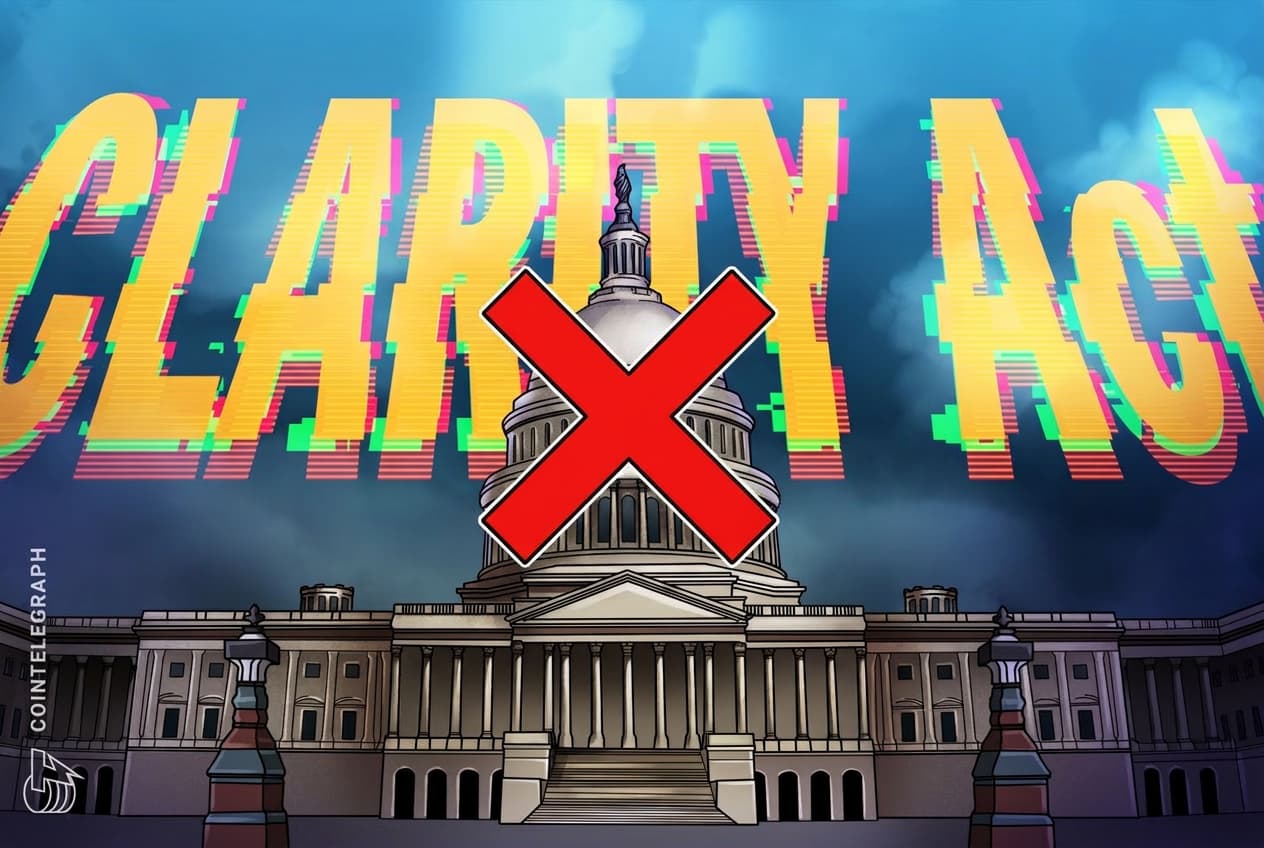
The US Senate failed to advance the CLARITY Act in a procedural vote this week, dealing a significant blow to bipartisan efforts to establish clearer cryptocurrency oversight rules. The setback comes after months of intensive negotiations between lawmakers seeking consensus on how to regulate digital assets and address ethical concerns within the crypto sector.
What Happened
The procedural vote—a critical hurdle before full Senate debate—didn't secure enough support to move forward. This type of vote typically requires 60 affirmative votes to overcome a filibuster. The failure to clear this threshold means the CLARITY Act remains stalled in the chamber, with no clear timeline for a second attempt.
The Stakes Behind the Vote
The CLARITY Act represented one of the more serious legislative efforts to establish a coherent regulatory framework for cryptocurrency trading and oversight. The bill aimed to define regulatory responsibilities across multiple agencies, clarify which assets qualify as securities versus commodities, and establish guardrails around staking, custody, and market manipulation.
For crypto markets, regulatory clarity has become increasingly critical. Without clear rules, institutional adoption remains constrained, and retail investors face inconsistent guidance from multiple regulatory bodies. The failed vote signals that reaching consensus on these foundational issues remains politically difficult—even among lawmakers who recognize the need for action.
Negotiations Stalled on Key Sticking Points
Sources familiar with the negotiations indicate disagreements persisted over two primary areas: the extent of SEC versus CFTC jurisdiction in overseeing digital assets, and provisions addressing ethics and transparency in cryptocurrency projects. Some senators pushed for stricter environmental and consumer protection language, while others worried overly restrictive rules would drive crypto innovation offshore.
The ethics provisions proved particularly contentious. Lawmakers debated whether the bill should require token projects to disclose founder holdings, restrict promotional activities, and establish disclosure requirements for crypto firms' political contributions.
What's Next for Crypto Regulation
The failed CLARITY Act vote doesn't end the regulatory discussion—it merely postpones it. Senate leadership hasn't indicated whether they'll attempt another procedural vote, or whether sponsors will pursue targeted amendments to address outstanding concerns.
Meanwhile, regulatory agencies continue operating under fragmented authority. The SEC, CFTC, and OCC maintain overlapping and sometimes contradictory guidance on crypto assets. This regulatory vacuum creates real risks: market participants operate in gray zones, compliance becomes a guessing game, and bad actors exploit ambiguity.
For bitcoin, ethereum, and broader crypto market sentiment, legislative gridlock typically translates to sustained uncertainty. Some investors view this as bullish—regulation has long been cited as a primary adoption barrier. Others see it as bearish, since institutional capital continues waiting for clearer legal frameworks before deploying serious portfolio allocations into digital assets.
Alpha Take
The CLARITY Act's failure signals that achieving comprehensive crypto regulation remains years away, despite growing urgency. We're watching for whether sponsors introduce a revised version targeting the sticking points, or if regulatory agencies accelerate enforcement instead. For portfolio management, assume regulatory uncertainty persists as a baseline structural feature—a factor that cuts both ways for crypto asset valuations going forward.
Originally reported by
CoinTelegraph
Not financial advice. Crypto investing involves significant risk. Past performance does not guarantee future results. Always do your own research.