
UN Chief Weaponizes Meme Culture to Push Global AI Governance at Summit
António Guterres stepped into Silicon Valley's playbook, deploying the crypto world's favorite "vibes" vernacular to deliver a sobering message about artificial intelligence governance at the UN's AI Summit. The Secretary-General made his starkest argument yet for binding international oversight me
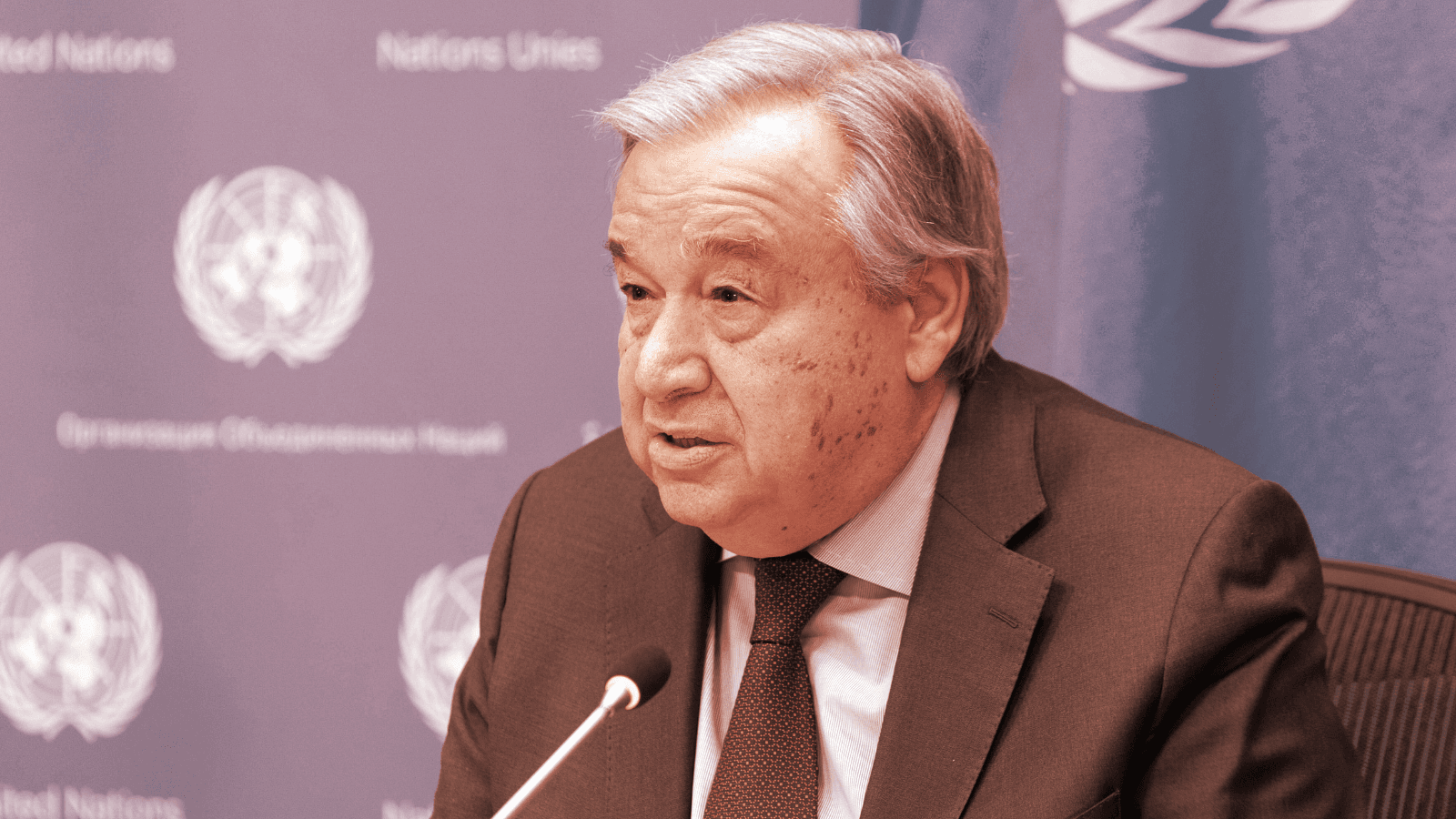
António Guterres stepped into Silicon Valley's playbook, deploying the crypto world's favorite "vibes" vernacular to deliver a sobering message about artificial intelligence governance at the UN's AI Summit. The Secretary-General made his starkest argument yet for binding international oversight mechanisms—and didn't mince words about autonomous weapons systems.
"We cannot vibe code the future of humanity," Guterres declared, appropriating the tech industry's casual language around subjective decision-making to underscore a critical point: AI development can't operate on intuition and market sentiment alone. This rhetorical pivot signals how seriously the UN takes the need to translate blockchain and crypto's decentralization ethos into governance frameworks that actually work at scale.
The crypto trading community should pay attention here. Just as portfolio managers analyze market intelligence to avoid rug pulls and systemic risks, global policymakers are racing to establish safeguards before AI systems operate beyond human comprehension. The parallels are striking: both spaces demand transparency, clear rules, and robust oversight to prevent catastrophic failures.
Guterres' summit appearance centered on one unambiguous demand: an international ban on autonomous weapons systems. This isn't theoretical speculation—lethal AI applications represent an existential fork in the road for humanity, similar to how certain crypto innovations can either democratize finance or enable fraud. The UN chief emphasized that strategic weapons powered by machine learning cannot be left to corporate development cycles or individual nation-states pursuing competitive advantages.
"The stakes could not be higher," Guterres stressed, framing AI governance as non-negotiable infrastructure for civilizational stability. His argument mirrors arguments made by institutional investors entering crypto markets: without clear regulatory frameworks and transparent market intelligence, the entire ecosystem remains vulnerable to manipulation and systemic breakdown.
The summit highlighted mounting pressure on tech giants and AI labs to accept binding international agreements. Unlike crypto's permissionless ethos, Guterres is pushing for a regulated environment where AI development follows established protocols—much like how mature institutional crypto trading requires compliance frameworks and auditable market data.
What makes this moment significant for traders and crypto analysts is the broader context: governments worldwide are simultaneously tightening crypto regulation while building AI oversight mechanisms. These parallel developments suggest policymakers view both emerging technologies as requiring active governance rather than laissez-faire innovation. This could create downstream effects for blockchain-based AI applications and decentralized intelligence platforms gaining traction in the market.
The Secretary-General's deployment of tech industry language demonstrates that global leaders understand their audience. By borrowing "vibe code" terminology, Guterres acknowledged that Silicon Valley—and by extension, the broader tech and crypto ecosystem—operates in its own linguistic universe. Making your case in that vernacular increases the likelihood it resonates with decision-makers actually building these systems.
International AI regulation will eventually impact crypto portfolios, particularly projects positioned as decentralized alternatives to centralized AI systems. Smart traders should monitor summit outcomes and regulatory signals closely.
Alpha Take
Guterres' push for binding AI governance sets a precedent that could accelerate crypto regulation frameworks. The UN's focus on autonomous weapons mirrors institutional crypto market's demand for transparency and oversight—suggesting a broader shift toward supervised innovation. Watch how AI-focused blockchain projects respond to governance proposals; regulatory clarity typically drives institutional adoption, not hinders it.
Originally reported by
Decrypt
Not financial advice. Crypto investing involves significant risk. Past performance does not guarantee future results. Always do your own research.